By Anne W. Semmes
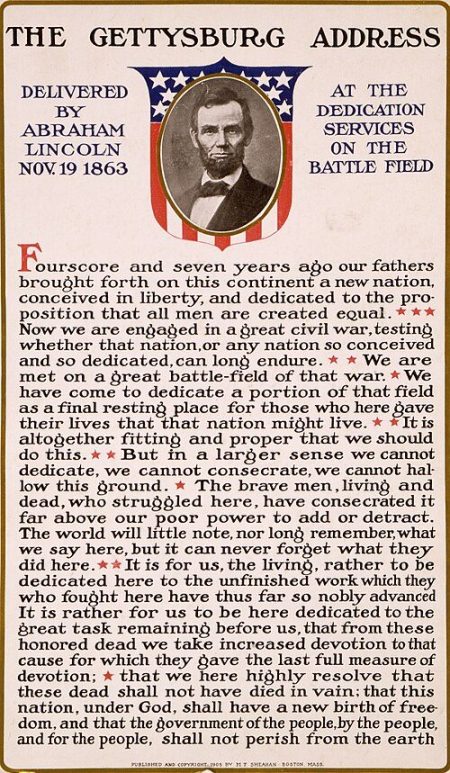
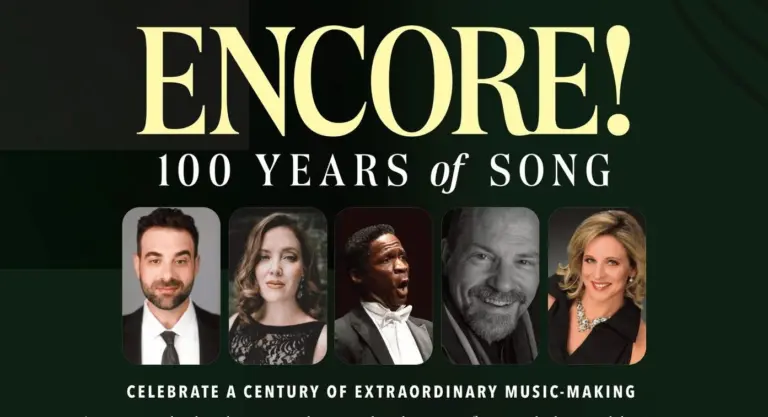
The Greenwich Choral Society (GCS) has much to celebrate in its 100-year anniversary with its season-ending concert “Encore! 100 Years of Song” on Saturday, May 16, at Christ Church Greenwich. This concert marks the second in its centennial year to feature the premiere of a new work composed by a Greenwich resident, the first by Rob Mathes, “The Marvelous and Mystical,” based on a poem, “Dover Beach” by British poet, Matthew Arnold, performed two months ago. But in sync with America’s 250th, this upcoming concert will feature an original choral work entitled, “Gettysburg Address” based on those forever famous words by President Abraham Lincoln, as composed by Granville Burgess, a “theater professional” with a passion for illuminating American history.
‘What drew me to the piece?” noted Dr. Christine Howlett, GCS choir director. “I do love to collaborate and support composers. And since Granville was a former GCS chorister… it seemed appropriate to consider. The text of the piece was the biggest draw. The speech is such an important part of American history, I loved the idea of including it in our concert.” Thus, Howlett would develop a section of the program honoring America 250 with “American Patriotic Songs” aside chorister favorites by Handel, Mozart, Bizet and Verdi.
Burgess indeed has been a GCS chorister since 2008, whilst busily living out his most creative life as playwright, lyricist, novelist, director, actor and producer – producing, directing or acting in 50 musicals and plays, with an Emmy nomination. But his passion for American history that began with it as his major at Princeton would be more realized through his nonprofit Quill Entertainment Company that opened the door to his series of “Mr. History” musicals.
“I had this idea,” he said, “kids don’t know anything about history. I’m going to get them excited about American history. So, I started writing these musicals where this magical character, Mr. History, comes into a bunch of kids sitting around saying ‘I hate history.’ He takes them back in time. to experience whatever that history is about. They come back to the present and say, ‘Wow, history’s kind of cool. I didn’t know it.’ So that was the paradigm and the model.”
What followed was a Mr. History musical trilogy to celebrate the bicentennial in 1974. The first being, “Paul Revere Rides Again,” and the second, “Common Sense” about Thomas Paine would be performed that summer on the Mall in Washington, D.C. with help from a grant from the Department of Education and the Redskin Foundation. Featuring July 4, 1776 was planned for the third [in the waiting wings].
But history musicals for adults took center stage, first featuring, “Battle Cry” commemorating the battle of Gettysburg, produced in Gettysburg in 2009. Then a more complex musical called, “Common Ground.” “It’s about the relationship between Frederick Douglass and Abraham Lincoln,” said Burgess. From thus came the inspiration to compose a musical version of the Gettysburg Address, “because I love the Gettysburg Address.”
That musical has yet to be performed, but he’s keeping the faith “It will happen someday because, hey, we all need to find common ground. Hey, if a former slave [Douglass] and a President can find common ground, surely, we can.”
With Burgess’s love of Lincoln, he would learn that Douglass/Lincoln history. “I discovered Lincoln met Frederick Douglass a few times,…Douglas was in the audience at his second inauguration speech… Douglas is the guy who’s trying to bring Lincoln to a greater understanding of race and the equality of black people…When he meets Frederick Douglass, he meets a black man… Douglas is the first African American to ever attend an inaugural ball at the invitation of Lincoln. And so, he goes to this ball, and they won’t let him in. They’re basically like, ‘No black people come into this ball.’ And Lincoln, in my musical, goes down there in person, but he sent someone down there to say, ‘Hey, let this guy in. This is Frederick Douglass. I want him in this ball.’ So, Frederick Douglass comes up, with Washington society all around, everybody’s white, and this is what I learned in my research that resonated in my heart, Lincoln goes around and says, ‘This is my friend, Douglass.’ He’s recognizing his equality…And in his last speech, he started talking about allowing the vote to black people…So Douglass became my protagonist, moving Lincoln to that realization.”
Burgess then addressed the challenge of composing music to the 272-word Gettysburg Address. “I kept looking at the words and trying to sing phrases to myself… I had the musical ideas like I wanted the women to sing solo here, and there acapella, and I wanted the men to start this verse, and the women to come in afterwards as an echo. And I wanted this word repeated four times or something… It’s full of musical ideas that are mine.”
But for those chords and vocal arrangements Burgess would turn to his “Common Ground” partner Stan Wietryzchowski, who cowrote “Common Ground” and arranged its music, to orchestrate the “Gettysburg Address.” “I have enough skill to write it out as a music manuscript, what the notes are, what the melody is, da, da, da, da,” he said, coming from his years singing as a baritone for the Choral Society.
That creative connection resonates with Burgess with the opportunity to feature his “Gettysburg Address” composition in this 250th celebratory year. “I’m very excited because I think Lincoln’s words are special and healing, and the kind of words we need to hear today. In these days of partisanship, it may be hard to summon up the same kind of psychic, positive energy about celebrating America that I had on the 200th, even though there were challenging times in 1976. But I’m excited to use this as an occasion to say, ‘Yeah, let’s celebrate this. Look at what Lincoln said four score and seven years ago and whatever it is now.’”
Burgess is also looking forward to the June 28 celebration of the tall ships coming to Greenwich Harbor as, “We’re going to sing a smaller version of the ‘Gettysburg Address’ as part of that celebration!”