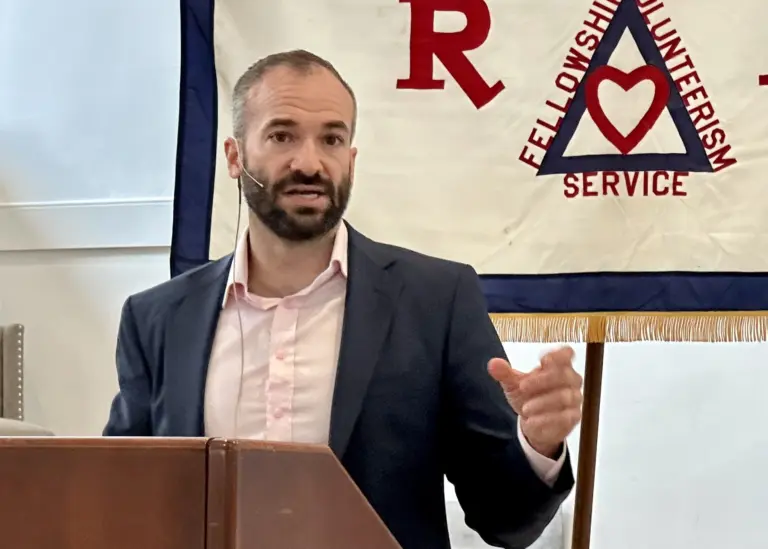
By Shari Shapiro
One of my favorite things about my job is leaving my office and walking downstairs.
At Kids In Crisis, our shelter sits just below our offices. Whenever I need a reset in the middle of a long day, I head down to where the kids staying with us are. I say hi, sit for a few minutes, and ask how school went.
And every single time, I come back with an education.
Usually in Modern English.
The last time I went down, one of the kids told me a snack was “bussin’.” A song on the speaker was “mid,” which apparently is not a compliment. Someone’s new sneakers were “fire.” A younger one informed me, that a boy in her class had “rizz.” One girl asked me to “spill the tea” about who I had a crush on when I was in school.
It’s easy to laugh at. I do, too. Some of it is genuinely funny, and most of it will be embarrassing to everyone involved in about… six… or seven… months.
But notice what’s underneath all of it.
Kids are always working on language. They are trying to find words for friends, for feelings, for the shape of a day. The slang is just the part we can hear. Most of what they are trying to say is harder to put into words, and some of it never quite makes it out.
I know an occupational therapist who works in a school in Greenwich, and something she said stuck with me. She told me that kids hold their feelings in their words. And when they don’t have the words, they hold their feelings in their bodies.
That changed the way I listen. Here are three things I hear kids working to put into words. They haven’t landed on the slang for any of them yet.
I’m not being dramatic. I just don’t have the words yet.”
When a child melts down over something small, it’s tempting to say they’re overreacting. But most of the time, what looks like drama could be a child running out of language.
They may feel something big. They can’t name it. They can’t explain why the morning went south, or why a comment from a friend landed so hard. So, it comes out loud, or tearful, or stomping down a hallway.
Adults have decades of practice naming feelings. Kids don’t. They are still learning the difference between tired and overwhelmed, between nervous and disappointed, between hurt and embarrassed.
When we slow down and help them put words to it, even just, “that sounds really frustrating,” we are not giving in to the drama. We’re teaching them the language they will use for the rest of their lives.
2. “School is exhausting, even when nothing is wrong.”
A child walks in the door after school, drops their backpack, and seems done. Not upset or in trouble. Just completely done.
By necessity, schools ask a lot of kids, even on good days. They are sitting still, following instructions, making friends, managing transitions, reading faces, raising hands, trying not to cry in front of other people if something goes wrong. They are “on” for seven hours straight.
By the time they get home, they have nothing left to be charming with.
When they collapse on the couch with their tablet and speak in grunts, that doesn’t mean something is wrong. It means home feels safe enough to stop performing.
The best thing we can do is not take it personally. A snack, a quiet minute, a question about anything other than school. Those small things say, “You can just be here. You don’t have to be on.”
3. “I don’t need you to fix it. I need you to be steady.”
When a child is going through something hard, our instinct as adults is to do something. Solve it. Explain it. Find the lesson.
Most of the time, that’s not what they are asking for.
What they are looking for is someone who doesn’t get rattled when they are. Someone whose face doesn’t change when they say the hard thing. Someone who is still there an hour later, a day later, a week later.
Kids can handle a lot of difficulty. What they can’t always handle is feeling alone in it.
Steadiness is quiet. It isn’t the big speech or the perfect advice. It’s the parent who keeps making breakfast the same way. The coach who still says hi after a bad game. The counselor who shows up on the same day every week.
None of that sounds dramatic. None of it will ever be the thing a child posts about. But years later, it’s what they remember.
If you’re ever working to figure out what’s underneath your child’s words and could use another set of ears, you don’t have to do it on your own. Our 24/7 Helpline is always open at 203-661-1911. You can call us, and you can now text us at the same number.
Kids today have more words than any generation before them. And still, the things that matter most are the hardest to say.
Our job isn’t to understand every signal perfectly. It’s to stay close enough to notice, and steady enough that when they are finally ready to say the real thing, we’re ready.
That’s the tea.
Shari L. Shapiro is the Executive Director of Kids In Crisis
Located in Cos Cob, Connecticut Kids In Crisis provides emergency shelter, crisis counseling, and community education programs for children of all ages and families facing crisis. Crisis can include domestic violence, mental health concerns, homelessness, substance abuse, economic difficulties, and other critical challenges. The Kids In Crisis Helpline is staffed 24 hours a day with trained Crisis Counselors, and provides free, confidential phone and face-to-face intervention, counseling, and referrals. Since its founding in 1978, Kids In Crisis has provided vital 24-hour services to almost 175,000 children and teens, and their families. Providers, educators, community members, and family members are encouraged to call or text the 24-hour helpline: 203-661-1911 for support.