By Anne W. Semmes
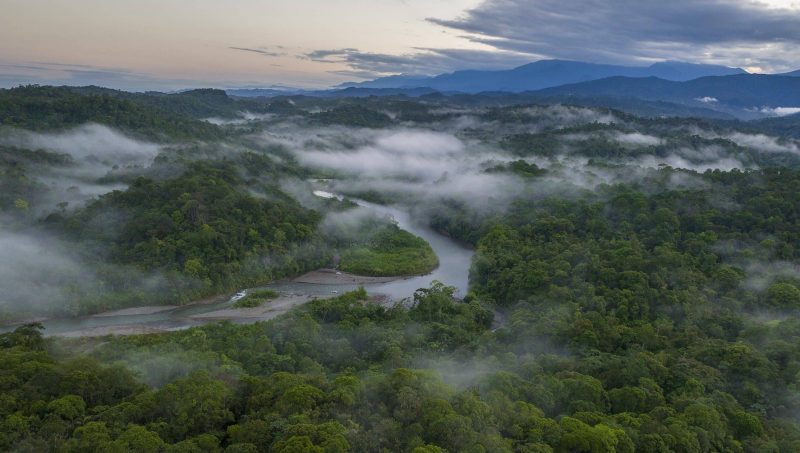
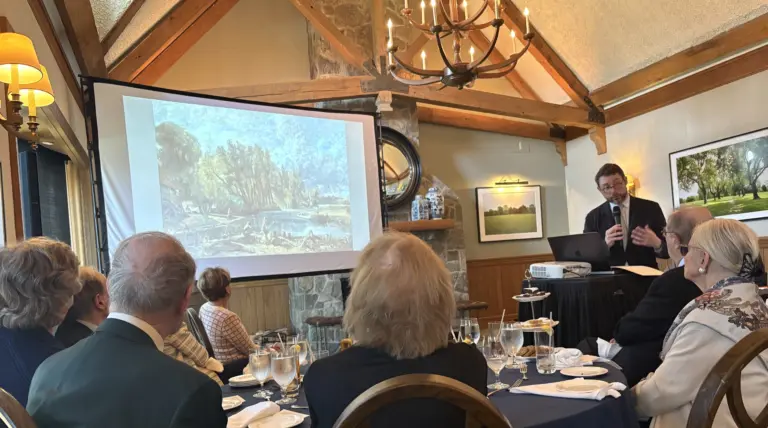
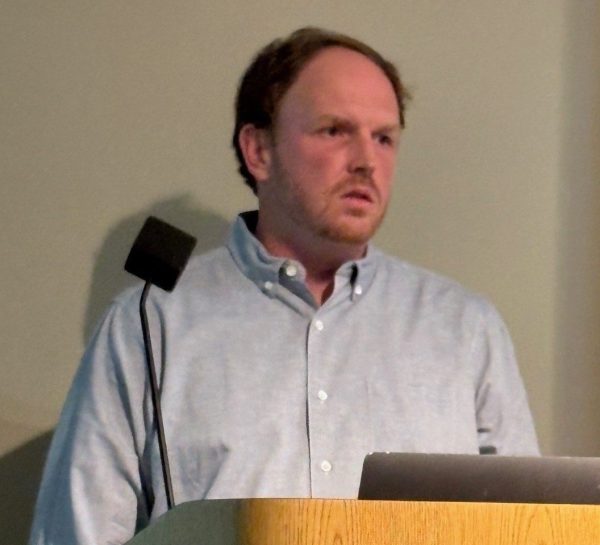
Jim Muchmore of Greenwich was the featured speaker at last Thursday night’s Pollinator Potluck attended by 60 bird lovers at Audubon Greenwich. Muchmore is a family man with two growing children but his imprint as conservationist is growing with his caring focus on the extraordinary biodiversity of one of the world’s 36 hotspots located on the easternmost regions of Panama, Columbia, Ecuador and the northwestern corner of Peru. So, the name for this hotspot area is Tumbes-Choco-Magdalena.
It was in the middle of that hotspot where Muchmore’s bride, Molly, insisted that they go on their honeymoon in 2013, he would tell. “So, we drove from Quito, in Ecuador to a place called Refugio Pas De Las Aves [notable for its birding],” and thus the Muchmore’s were introduced to a region called Choco, a live-changing experience for Jim Muchmore.
“Jim has worked closely with scientists, NGOs, and local partners,” introduced Rochelle Thomas, Audubon Center director, “to raise awareness, support fundraising, and protect critical biodiversity hotspots, particularly within the Tumbes-Choco-Magdalena and tropical Andes regions.” Thomas cited Muchmore as “an established graphic and packaging designer” who had “transitioned from the New York City design world into a conservation focused career.” Add to that skillset his being an “experienced photographer,” newly invited by Thomas to serve on the Center’s Greenwich Advisory Board.
By year 2016, after Muchmore had “explored Ecuador a little more… really learning about the Choco region,” he began “exploring designs well within conservation,” to “put a brand name to the Choco (“Save-the-Choco”) and see if we could build awareness through that.” He found support from other conservationists and groups like the Rainforest Trust. What came next was to partner with an Ecuadorian organization called Fundacion Jocotoco.
Save-the-Choco kicks off
“When we started in 2017,” said Muchmore, “we were protecting around 3,000 acres, but today we’re at 47,000 acres protected… So, we’re creating a corridor from a hundred meters up to 4,000 meters.” And “Where that biodiversity really thrives is in the gradient levels,” as found from the research of partner Fundacion Jocotoco. “What they noticed is that creating corridors from low elevation to high elevation gives species the biggest chance of survival… Bird species use the gradients to follow either food or if with global warming they can move up to cooler temperatures and the plants thrive… or if it gets cold, they can move back down. So, the idea was to protect these corridors where it gives the species movement to go up and down in the mountains.”
With his photographs, Muchmore would describe that biodiversity that he “fell in love with,” in the Choco-Magdalena area, which includes the Galapagos Islands. “And that includes tropical moist, tropical dry forest on the Pacific coast of South America.”
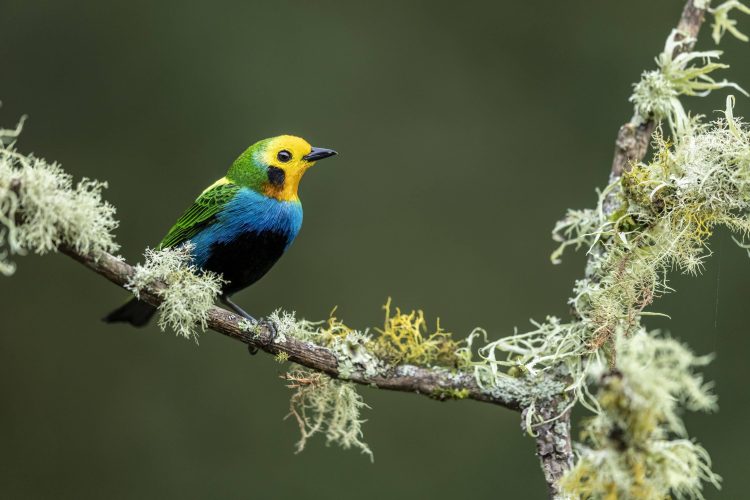
A hotspot he told must contain “at least 1,500 species of vascular plants that are endemic to the region.” And what is endemic? “Endemic refers to a species found nowhere else.” Such as a Multicolored tanager he saw for the first time alongside a Canadian warbler “a breeding bird here in Connecticut.” He’s found it “amazing to see that juxtaposition of tropical birds with birds we are familiar.”
One of “people’s favorites,” he told, “is the most stunning (Plate-billed Mountain) toucan species for sure. But in this region, there are over 600 birds recorded,” though he believed, “the estimates are much higher. There are over 90 endemic bird species to this area, which makes it one of the highest, if not highest endemic bird regions in the world.” He then introduced a Tooth-built hummingbird, also endemic. “You can see its little teeth. It’s a very unique hummingbird.” He cited the Columbian Choco as thought to be “the most floristically diverse area in the Neotropics.”
Finding orchids and magnolia trees
He showed photos of Slipper orchids “on the cliffs of the Pacific Coast… where the rainforest crashes basically into the ocean and it’s hard to believe that orchids can be that close to saltwater.” He described Dracula orchids as “really interesting orchids… They hang over and mimic mushroom gills… they’re pollinated by flies that pollinate mushrooms.” But “unfortunately” with the exotic orchid trade, “it’s rare to see them in the wild.”
He addressed that biodiversity again. “On a 30-acre plot in Ecuador, they registered 550 species of trees in just 30 acres. All of North America has a thousand species, and Ecuador is about the size of Arizona.” Yet “Ecuador has 4,000 species of trees.”
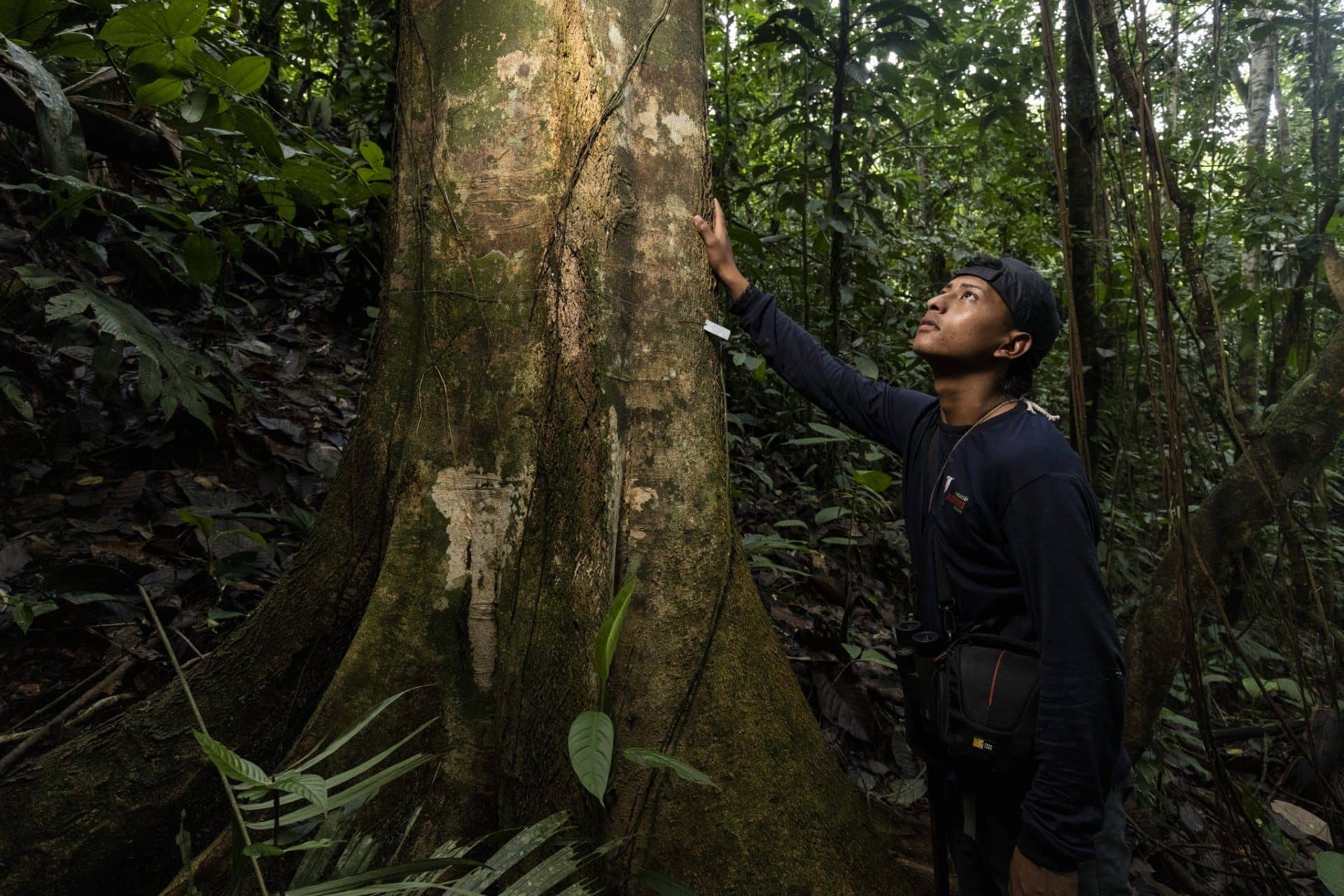
Muchmore experienced amazement walking in the rainforest with a park ranger hired away from the lumber industry. “He knows every single tree species in the entire area… He’s recorded all the trees for us, but he really took to heart finding the magnolia trees,” and in so doing “he counted enough magnolia trees on our protected property to take it from critically endangered to endangered.”
“But let’s get back to birds,” said Muchmore. “Twelve percent of the world bird species are protected at Fundación Jocotoco and 1,385 species have been recorded.” And in three years of migratory bird surveys in those reserves, “We’ve produced 44 species. Anybody want to guess what the number one counted bird is? “A Swanson’s thrush. Number two, a Blackburnian warbler and Number three, a Canadian warbler [breeding in Connecticut].”
Lodges available for birdwatching
Foundation Jocotoco now has, he stated, 18 reserves throughout the Choco country. “We manage 120,000 acres with our partners.” He noted, “You guys are more than welcome to visit any of them. Five of them have lodges to stay at… Some of them a little more remote… but these northern and southern parts are pretty common for bird watching groups.”
One of those reserves, the Hillstar Reserve, is named for a new bird species discovered in 2017. “It’s called the Blue-throated hillstar,” said Muchmore who’d managed to photograph it. “I was there when they were all molting. So, none of them were in nice plumage, but there are fewer than 500 of these birds recorded. We were able to react quickly, buying the first pieces of property to protect it.”
Importantly, what Muchmore has learned in his Save-the-Choco conservation efforts is the need to “support locals doing the work because this research helps us understand there’s extreme endemism necessary to be protected.” And “When we’re protecting things for orchids, birds, reptiles, amphibians, it all goes back to our migratory birds…We forget that many of our migratory birds spend eight months of the year living there and come to visit us to breed. So, supporting local science helps us protect these birds and understand what areas are threatened and what areas are important to protect.”
For more information on Jim Muchmore’s biodiversity conservation effort, visit www.savethechoco.com