 By John Engel
Manhattan reacts like a stock market. Deals are made or pulled in real time, so when uncertainty hits, you see it immediately in contract data. Fairfield County behaves more like private equity. Transactions depend first on what is available to buy, and supply has been consistently tight. That means external shocks like war or rising rates do not show up as a sudden break. They show up, if at all, as fewer deals relative to last year within an already constrained market.
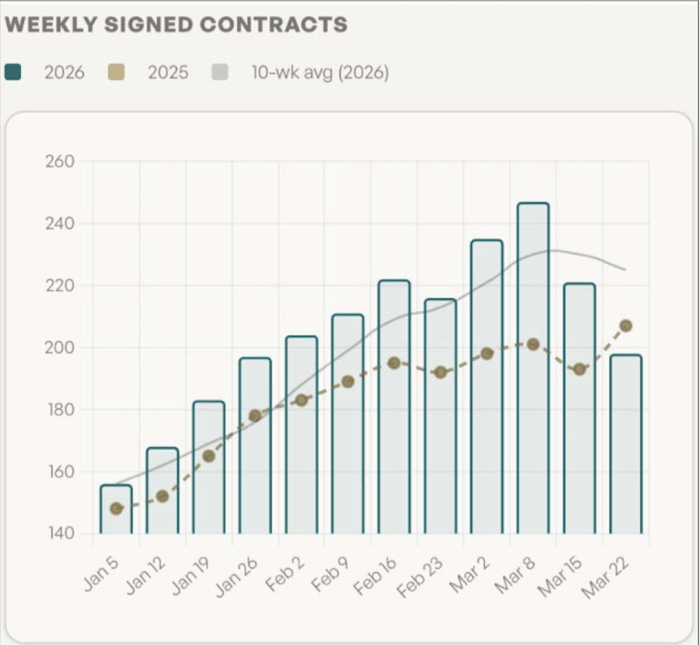
Jonathan Miller’s Manhattan data (housingnotes.com) demonstrates how quickly the Manhattan market reacts. For seven straight weeks, signed contracts were running ahead of last year, climbing from 204 to a peak of 247 in early March. Then momentum reversed sharply. Contracts fell to 221, and then to 198 in the week ending March 22, turning negative year over year. The move wasn’t a one-week anomaly. It was a twoweek drop that broke the upward trend.
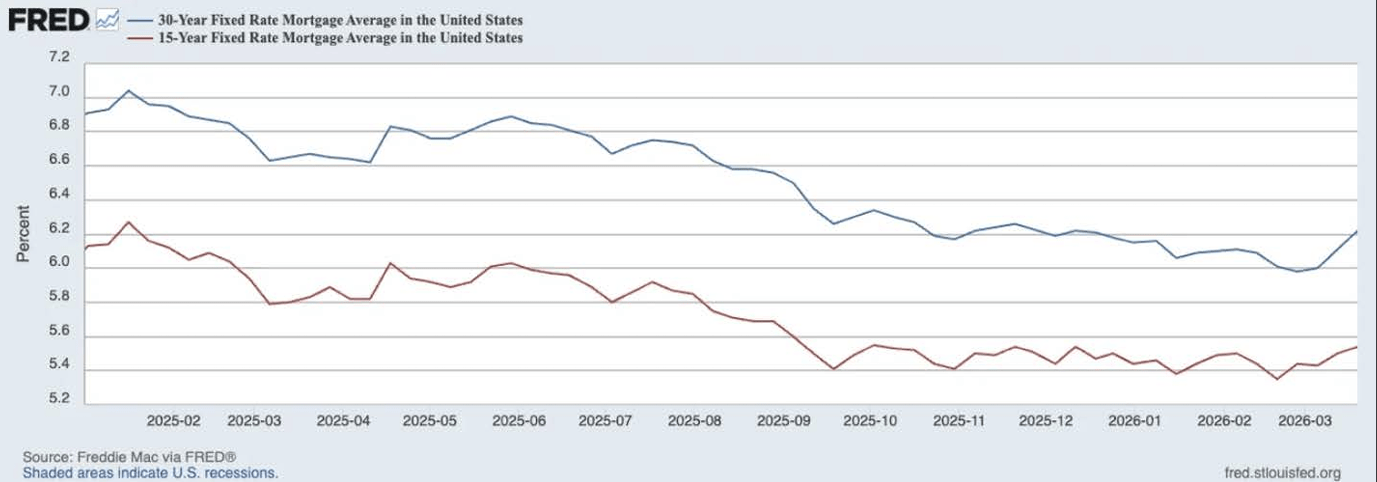
We think we know why. On Feb. 28, the United States and Israel launched coordinated strikes on Iran. The market reaction was immediate in energy and slower in rates. Oil prices jumped roughly 10% to 13% within days and more than 30% within the first week, reflecting the sudden increase in geopolitical risk. Mortgage rates followed over the next two weeks, rising from 5.98% on Feb. 26 to 6.22% by March 19, a roughly 24-basispoint move. Against that backdrop of higher uncertainty, higher energy costs, and rising borrowing costs, Manhattan contract activity turned. War and its knock-on effects had an immediate effect on deal volume.
Jonathan compared the luxury market with the overall market and noted that luxury market contracts (the top 10%, roughly $4mm+) dipped 7 points and recovered 2 because they are less dependent on those elevated interest rates. What I see is a fragile top end.
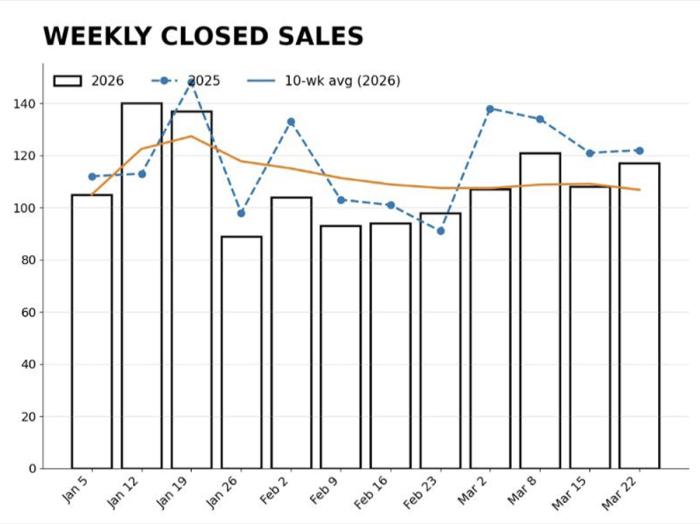
We then looked at Fairfield County to see if the same sequence showed up here. It did not. Manhattan shows a clear break in real time. Fairfield County does not. What Fairfield County shows is that all four March weeks ran below last year: 107 closings versus 138 in the week ending March 2, 121 versus 134 on March 8, 108 versus 121 on March 15, and 117 versus 122 on March 22. That is not a sharp break tied to a single week. It is a March market that consistently underperformed last year.
That difference comes from how the two markets function. Manhattan’s chart is built on signed contracts, which capture decisions as they are made. Fairfield County’s chart is built on closings, which reflect deals agreed to weeks earlier. Add to that a smaller number of transactions and a much tighter inventory environment, and the result is a series that does not move sharply from one week to the next.
That leaves a narrower conclusion than Manhattan, but a more precise one. In March, Fairfield County did not accelerate. It did not break. It simply failed to match last year’s pace.
 It’s Always Something
Roberto Cabrera’s look back at seven years of disruptions to the Manhattan market is worth a read (robertocabrera.com). He says this isn’t noise; it’s a defining feature of the real estate cycle:
• 2019: Housing Stability and Tenant Protection Act of 2019
• 2020: COVID-19 pandemic
• 2022: Russia-Ukraine War + rate spike
• 2023: 2023 Regional Banking Crisis
• 2024: persistent 7% rates • 2025: “Liberation Day” (market shock)
• 2026: Iran conflict + rate reversal
Volume is down in Manhattan, but value is intact, leading him to the conclusion that the market is transactionally weak but fundamentally stable. It is based on data showing deal volume has been suppressed for years without a meaningful decline in prices. And, he attributes this to the constancy of demand in the world’s greatest city.
“The market feels weak because fewer deals are happening, but it is not weak in pricing terms.
As in Fairfield County, inventory constraint is the root cause of reduced deal volume because sellers can’t find replacement homes, higher rates make moving more expensive, and the lock-in-effect of rates results in the supply-side freeze, not a demand collapse. The takeaway is that repeated external shocks suppress activity, but the underlying market remains stable because demand persists and inventory is constrained.
Notes from the Monday meeting:
February snow disrupted the first month of the Spring market, always the lowest month for sales every year. Fairfield County recorded 395 sales, down 10% from each of the last three years.
John Engel is a broker on The Engel Team at Douglas Elliman in Connecticut. He got three calls to “list my house” this week, all empty nesters. One is moving to Manhattan. Another to northern Europe. A third to London. Two are thinking about trading in the townhouse for single-level living, and another left when his wife accepted a job in Asia. It’s nice when sellers come to this decision on their own time, in their own way, and not because life threw them a curveball. John hopes that when the time comes, he will have the courage to move on, and that we’re in a decent market cycle.