By Jay Briar
Whether in education or not, many of us have experienced that specific brand of Friday afternoon exhaustion where we spend the last hour of the workweek curating a massive to-do list for the weekend. We tell ourselves we are being productive by “setting expectations” for our Saturday, only to realize on Sunday night that we spent our precious family time doing the very things we should have handled while we were still at the office. We often inadvertently force our students into this same cycle, using the school day to talk about work rather than actually doing it.
In many traditional classrooms, the model is backwards. A teacher might spend forty minutes showing a video or lecturing on a concept, then send students home to write an essay about it. This assumes that the “easy” part is the listening and the “hard” part—the actual synthesis and creation—can be handled alone at a kitchen table. But if you have ever watched a child stare at a blank cursor for two hours, you know that the heavy lifting of learning happens during the output, not the input
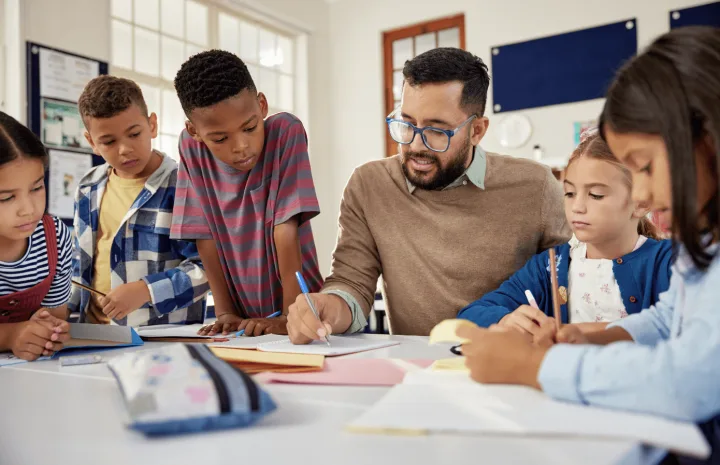
As we think critically about what education should look like to prepare our students for the future, we have to look closely at how we can flip this script. If a student needs to watch a documentary or read a chapter, they can do that on the bus or at home without much help. The magic happens when they return to the classroom. That is when the teacher’s expertise is most valuable. Instead of lecturing about how to write, we should be writing alongside them, offering feedback in real time as they struggle with a thesis statement or a complex math problem.
James Lang, a professor at Notre Dame University, wrote about this recently in the Chronicle of Higher Education. He admitted that early in his career, he felt like he wasn’t “teaching” unless he was on his feet lecturing. He eventually realized his students needed him most when they were actually practicing their skills. He points out that to do anything well, students need to practice it in the presence of a teacher who can guide them when they struggle.
This shift is even more vital as we navigate the rise of artificial intelligence. Many educators are currently caught in a game of whack-amole, trying to police whether a student used a chatbot to write a paper at home. But as Lang notes, if we don’t want students to default to AI, the classroom has to become the laboratory for practicing the skills we care about. When the writing happens in the classroom, the “originality” of the work isn’t a mystery to be solved; it is a process the teacher witnesses firsthand.
By moving the “doing” into the center of the school day, we take the pressure off the home environment and put the emphasis back on the mentorship between student and teacher. It allows our children to leave school feeling accomplished rather than burdened with a list of instructions for work they aren’t quite sure how to start. If we want our students to be thinkers and creators, we have to give them the time and the professional partnership to practice those crafts where it matters most: in the classroom.
Jay Briar is the Head of Whitby School in Greenwich which serves students from preschool through middle school, offering Montessori and International Baccalaureate programs.