The Green Infrastructure Upgrade that Will End Blackouts, Restore Scenic Beauty and Save Billions
By Elizabeth Hopley
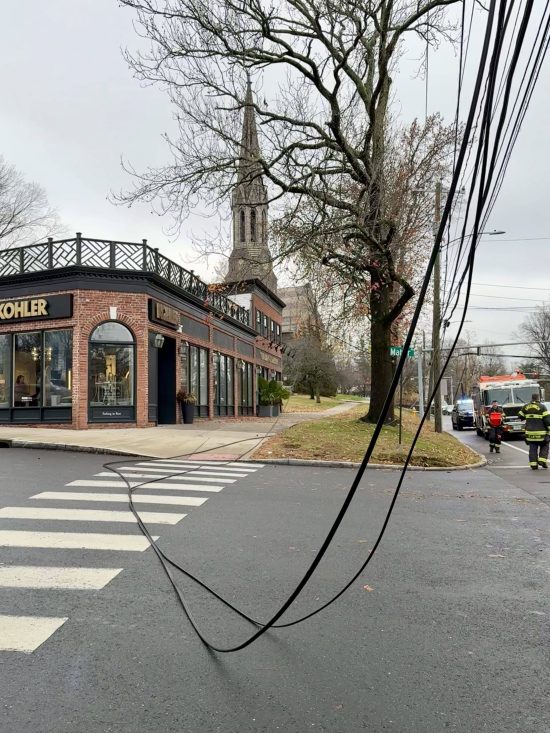
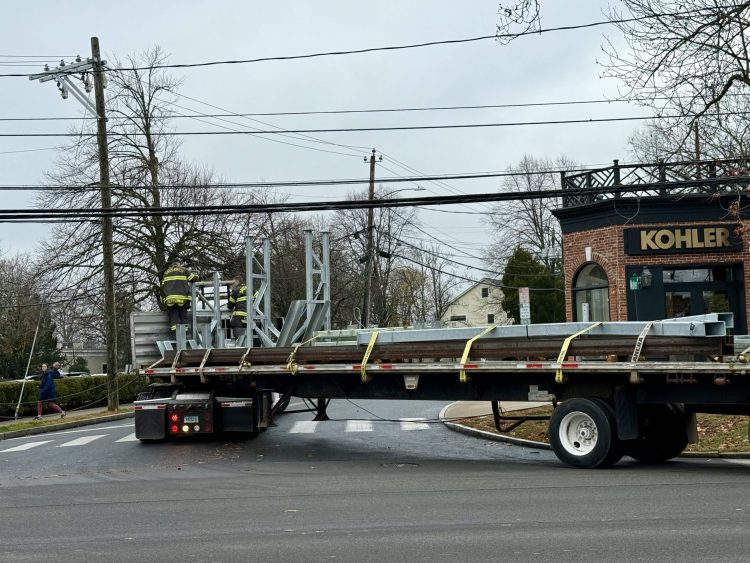
The day before Thanksgiving, during families’ last minute errands, a construction supply truck snagged the sagging wires along busy East Putnam Avenue, grinding traffic to a halt. Firemen arrived quickly to untangle the mess and divert traffic, but had to leave the wires strewn in the street until the utility company could restring them back to their precarious perch. It’s unknown how many stores and residents lost power, internet, phone, but it begs the question: Isn’t there a better way for utilities to service customers in the 21st century?
This same story plays out countless times across our town and nation: a fragile 19th century system of exposed overhead wires easily derailed by minor mishaps or weather conditions, causing blackouts, lost productivity, and safety issues. Lawrence Berkeley National Lab found that America’s overhead grid costs us $80–$180 billion every year in outages, spoiled food, lost wages, and emergency services.
Now, imagine our town without the unsightly web of overhead wires. Instead of driving past a procession of utility poles leaning under the weight of too many wires, there’s a lush, green canopy of trees, cleaning the air, absorbing storm water runoff and cooling the road in the heat of summer. Meanwhile the underground grid is buried safely along our roads, bringing worry-free reliability to our utilities infrastructure.
Roadside trees pay dividends beyond scenic beauty. A mature roadside tree is a living asset that delivers $90,000–$150,000 in measurable benefits per tree over its lifetime. One 60-foot tree absorbs 40,000 gallons of stormwater a year, cuts summer cooling bills up to 30%, and cleans the air of pollutants that cause asthma, heart attacks and strokes.
New drilling technology is a game-changer to the timeline and cost of burying the wires. New innovators are using technologies like plasma boring to drill up to 100x faster than traditional tunneling while reducing costs by up to 90%. The granite ledge so pervasive in Greenwich is easily bored through, creating a stable conduit to protect wires.
Even projects using traditional trenching (generally $1-5 million per mile) now pay for themselves in 8–15 years, then continue to save money. Maintenance of overhead infrastructure costs 75–80% more annually than underground with the largest cost being vegetation management. And electricity runs more efficiently on underground insulated wires, nearly eliminating the significant losses to exposure on overhead wires.
Undergrounding overhead wires and planting trees will deliver four immediate wins: First, blackouts almost disappear and communications like phone and cable become stable and reliable. Second, scenic beauty is restored as trees replace the visual clutter of wires and poles. Third, home values increase by 7–20% in neighborhoods that have underground utilities. And lastly, the cost can be offset by savings in other areas. Outages already cost billions. New drilling technology has slashed undergrounding costs and the outsized costs of maintaining overhead systems are minimized
We cannot keep kicking the can down the road. Let’s bury the wires. Not just some of them. All of them. It can be done through utility investment, federal matching funds, grants, long-term bonds, rate payer assessments, and public-private partnerships. The U.S. lags behind other developed countries with the least reliable system and 80% of our wires still overhead. It’s time to upgrade this Third World infrastructure.
Do your part: call or write your local and state representatives and Connecticut’s Public Utility Regulatory Authority (PURA). Let them know you support bringing our overhead distribution wires underground. One short message can start the change.
As the “Gateway to New England,” Greenwich can take the lead and replace the unsightly and unreliable overhead infrastructure with beautiful roadside trees, because the best time to bury the wires — and plant a tree — was 20 years ago. The second best time is now.
Elizabeth is the VP of the Board of Directors for the Greenwich Tree Conservancy; Vice Chair for Transportation and Infrastructure with Garden Club of America; Member of the Board of Directors of Scenic America; and RTM member from District 11.