By Cheryl Dunson
As I write this, it seems that winter’s bitter cold and snowy grip is loosening. Daffodil leaves are pushing through the soil, birdsong can be heard intermittently, and trees are starting to bud. While Greenwich is a beautiful town at all times of year, arguably Greenwich seems at its loveliest in spring with the canopy filled with a lovely array of white, pink, and red flowering trees.
It almost seems miraculous when reflecting on what the trees had to endure this winter. Trees are a marvel in so many ways. It got me thinking about books where trees are a focus that have informed and/or inspired me. And then I wondered about what books may have informed and/or inspired my board and advisory board colleagues at the Greenwich Tree Conservancy. I decided to ask them. Below is an admittedly idiosyncratic list of fiction and non-fiction tree related books that we have enjoyed. We hope you do too!
Listed in alphabetical order by author. Asterisks indicate available through Greenwich Library. Comments in italics are from GTC board members. Other comments found on Goodreads.com.
The Ghosts of Evolution: Nonsensical Fruit, Missing Partners, and Other Ecological Anachronisms by Connie Barlow, 2000. The book is about past plant and animal partnerships that no longer occur due to the loss of the fauna. The take home points for me were the amazing animals that existed in the not so far past, and how little is known about biological partnerships. The reason why many of these interesting plants have such restricted geological ranges is due to the loss of the primary seed disperser and overtime the population decreased. Thus seed dispersal became more reliant on gravity and water movement.
The Legend of Charter Oak as Told by Grandpa Herman By Cynthia Berkowitz, 2014. About the Great Charter Oak in Hartford; a favorite children’s books about the special meaning of trees in American History.
The Great Kapok Tree: A Tale of the Amazon Rain Forest* by Lynne Cherry, 1990. The author and artist Lynne Cherry journeyed deep into the rain forests of Brazil to write and illustrate her gorgeous picture book.
The Grandpa Tree by Mike Donahue, 2001. An elementary tale of the life cycle of a tree is also a life lesson for people.
My Side of the Mountain*, by Jean Craighead George, 1959. The main character, a 15 year old boy, survives the winter by living in a hollowed out massive Hemlock. The tree becomes a beloved character as it provides warmth, safety, and security for the runaway.
How to be More Tree by Potter Gift, 2020. This is a sweet little book, which inspires life lessons for happiness. This a great book for young children.
The Legacy of Luna: The Story of A Tree, A Woman, and the Struggle to Save the Redwoods* by Julia Butterfly Hill, 2000. Inspired me to become a tree advocate. The book chronicles Hill’s experiences living on a small platform 180 feet up in a 1,000-year-old redwood tree in Humboldt County, California, from December 1997 to December 1999. Her goal was to prevent the Pacific Lumber Company from clear-cutting the tree and the surrounding old-growth forest.
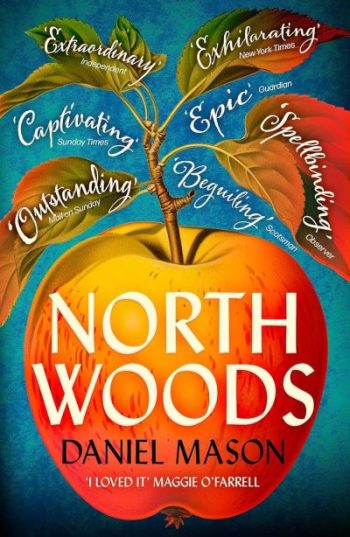 North Woods* by Daniel Mason, 2023. This book tells the story of a single house in the woods of New England over four centuries through the lives of its many inhabitants, both human and non-human. The book explores how the past in never truly gone, and how the cycles of nature effect each generation. One of my favorite books in a long time. Another board comment: A meaningful book with a focus on the changing aspects of property throughout the centuries.
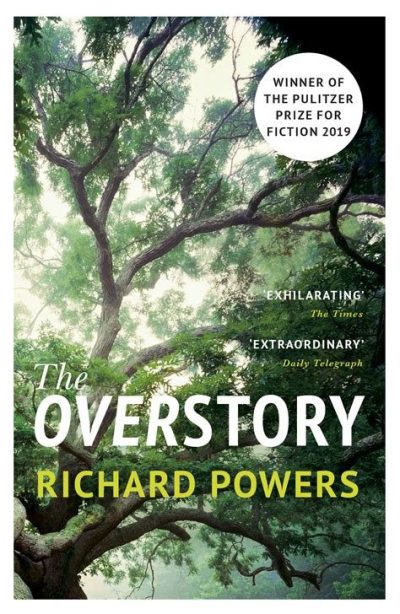 The Overstory* by Richard Powers, 2018. Combines superb storytelling with latest science on trees. Seems at first to be series of short stories and then the “plot thickens.” Pulitzer Prize winner in Fiction.
American Canopy: Trees, Forests and the Making of a Nation* by Eric Rutkow, 2012. It details how forests provided resources for building the nation (ships, railroads) and were central to figures like Washington, Jefferson, and Roosevelt, while also covering cultural impacts like the Liberty Trees, Thoreau’s retreat, and conservation efforts for species like the American chestnut. The book argues that trees are fundamental, often overlooked, “silent figures” in the American story, influencing everything from expansion to national symbols.
The Light Eaters: How the Unseen World of Plant Intelligence Offers a New Understanding of Life on Earth* by Zoë Schlanger, 2024. It delves into the latest research on plant and tree communication, senses (Did you know that many plants have rudimentary sight?), and even what could be called intelligence. It is a book that completely changed how I view plants.
The Lorax* by Dr. Seuss, 1971. Long before saving the earth became a global concern, Dr. Seuss, speaking through his character the Lorax, warned against mindless progress and the danger it posed to the earth’s natural beauty. Inspired me at a very young age to speak for the trees.
The Island of the Missing Trees* by Elif Shafak, 2021. A rich, magical novel on belonging and identity, love and trauma, nature and renewal. Was enjoyable and surprising and so well written and has a talking fig tree through the generations.
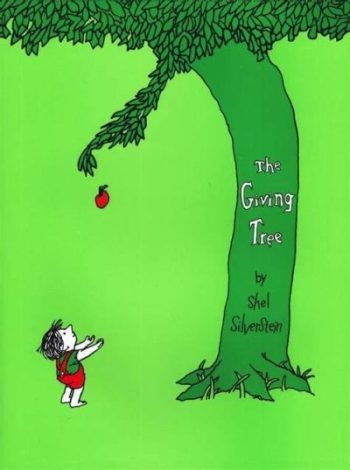 The Giving Tree* by Shel Silverstein, 1964. This children’s classic has at its roots the giving and accepting of unconditional love. Two generations of our family “twigs” have been taught and nurtured by the parable. Another board comment: The older I get, the more I adore The Giving Tree. It breaks my heart every time I read it.
A Tree Grows in Brooklyn* by Betty Smith, 1943. It was one of the favorite books of my youth and I love that it puts our familiar Ailanthus in a different light. I think it stands as a true American classic. Another board member comment: I haven’t read it since childhood, and don’t remember it well, but here’s Wikipedia’s summary: The main metaphor of the book is the hardy tree of heaven (Ailanthus altissima), whose persistent ability to grow and flourish even in the inner city mirrors the protagonist’s desire to better herself.
The Lord of the Rings* by J.R.R. Tolkien, 1954. It has been years since I read Lord of the Rings but I remember that trees were important characters in the books. Here is something I found written about that: The Tolkien scholar Matthew Dickerson wrote, “It would be difficult to overestimate the importance of trees in the writings of J. R. R. Tolkien”. Caring about trees is a central part of the world of Tolkien, and the author’s own personality, too. From Treebeard in the Fangorn Forest to the tall Mallorn trees at the heart of Lothlórien, when you dive into Middle Earth and The Lord of the Rings you tumble into a world of ancient, wise, and all-knowing trees.
The Hidden Life of Trees: What They Feel, How They Communicate – Discoveries from a Secret World* by Peter Wohlleben, 2015. Peter Wohlleben shares his deep love of woods and forests and explains the amazing processes of life, death, and regeneration he has observed in the woodland and the amazing scientific processes behind the wonders of which we are blissfully unaware. Very compelling.
Cheryl Dunson, Advisory Board Co-Chair, Greenwich Tree Conservancy. To find out more about the Greenwich Tree Conservancy, visit us at: www.greenwichtreeconservancy.org