 The most important distinction in modern media is intent. Mistakes are temporary and often willingly corrected. Intent is more permanent.
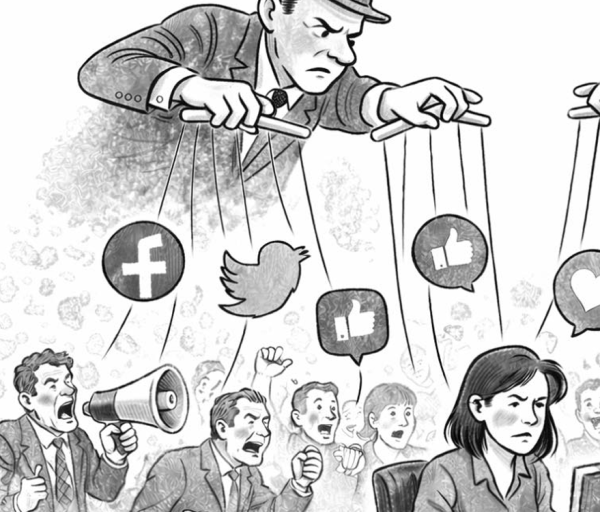
Social media and emailed partisan newsletters are not intended to inform; they are intended to provoke. Their purpose is not civic understanding but engagement, and engagement is most easily gathered through outrage, suspicion, and conflict. Partisan platforms operate with a similar purpose. They do not intend to enlarge a reader’s view of reality but to narrow it, to push an audience toward a predetermined conclusion, and to turn public life into a permanent contest of enemies.
Intent shapes everything downstream: tone, fact selection, framing, the willingness to grant charity, and most important, the appetite for humiliation. There is a particular ugliness in the appetite to set up a situation and then use another person’s good intentions as a weapon for humiliation. But when the purpose is power, the product will be distortion. The goal: victory.
That reality makes the role of a community newspaper clearer, and harder. A local paper has a different purpose. Its mission is not to divide neighbors into camps but to describe a shared place with joy and care. It reports on events, schools, budgets, public safety, zoning, volunteer efforts, churches, cultural life, deaths, milestones and the daily decisions that determine how a town functions.
The intent is constructive. It is to build understanding.
In his Farewell Address of September 19, 1796, President George Washington cautioned the country about partisan factions and their consequences: “The common and continual mischiefs of the spirit of party are sufficient to make it the interest and duty of a wise people to discourage and restrain it.”
He understood that when public life becomes organized around hostility, institutions bend toward excess and citizens toward suspicion.
The pressures facing local newspapers today are intense. Towns are losing them; every day another one closes. Part of the reason is reflected in exactly that spirit of partisanship. On the far right, partisan outlets have emerged that frame themselves as alternatives but often function as grievance engines. On the left, similar digital platforms pursue their own ideological enforcement. This pattern is not new. Political advocacy has always sought media vehicles.
What is new is the insistence that every single institution must be captured.
Both extremes share a common impulse: They cannot tolerate a local paper that belongs to the community rather than to a faction. They crave alignment and assume they are entitled to it. They do not want an independent civic voice; they want a weapon.
When activists on either end demand coverage or that a community newspaper “move” in their direction, it demonstrates something revealing. They are not asking for fairness. They are asking for obedience.
The intent of a community paper is rooted in a commitment to the long-term health of the town. It is to remind residents that they are neighbors before they are adversaries. It preserves the possibility of common life.
We celebrate unity and joy and goodness as a paper. We celebrate the volunteer effort, the school concert, the local triumph, the quiet act of service. We do so at a time when many involved in public life appear angry, suspicious and eager to play “gotcha” rather than to serve. That climate diminishes public trust. It is sad.
Greenwich does not need more contempt. It does not need partisan rage masquerading as local concern. It needs institutions that still believe community is worth sustaining.
A wise people protect institutions whose intent is to build rather than to tear apart.