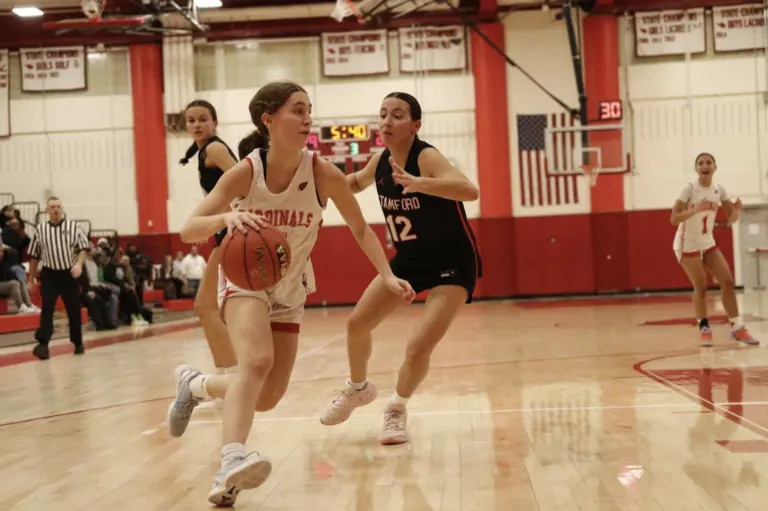
They still stop us in the supermarket. “I love Icy’s columns,” they say, or “We clipped the photo of the basketball team for the fridge.” At the dry cleaner, outside church, after the Memorial Day parade, we hear it again: “The Sentinel keeps getting better”, “It really is the paper of record now” or “You guys really focus on community” almost always followed by words of encouragement: “Keep it up.”
This is not sentimentality. It is something sturdier. In a country where local newspapers are vanishing—more than 2,500 have folded since 2005—the Greenwich Sentinel still arrives each week. Still lands on the doorstep. Still tells the town its own story. It is more of a miracle than you may know. Staying in business for local papers these days is almost an impossible task.
Why are we still here? Stubbornness and the wonderful Greenwich residents who want to know where they live.
In other places, local papers have been quietly erased. Staff let go, printing presses shuttered, the lights turned out. What’s left behind is a quiet kind of disorientation: towns where no one quite knows what happened at the school board meeting, where zoning decisions go unnoticed, where longtime residents pass away with no obituary in print, just a line on a funeral home website. Things covered “online only” in blogs.
That doesn’t happen in Greenwich.
Here, there is still a column about the newly planted trees and a column from your neighbors and leaders. There are still names listed in the honor roll, still little league scores, still stories that start on local high school stages and in living rooms and end up in print. Here, the paper notices.
We’re not immune to the pressures—rising costs, shrinking margins, the endless scroll of everything everywhere all at once. But what we have, what makes the Sentinel thrive, is not a clever algorithm or a corporate owner. What we have is Greenwich itself.
The Sentinel is not just about news. It’s about memory. And continuity. And the dignity of small things recorded. We cover Town Hall and the PTA, yes—but also the pastor retiring after 40 years, the garden club bringing wreaths to shut-ins at Christmastime. Some move away but many still subscribes because the paper helps them feel close to home.
The paper, in this way, is not just a paper. It’s a neighbor, a witness, a kind of common mirror we hold up to each other every Thursday.
It’s fashionable now to speak of news in terms of disruption and scale—clicks, reach, monetization. But none of those words capture what we see when we walk into the schools, or attend the budget hearings, or listen to parents and teachers talk about what matters in a child’s life.
They don’t capture what happens when we print a photo of a 98-year-old veteran and people email to say, “You made my grandfather’s day. Thank you.”
In Greenwich, people still want a paper. We are a town that remembers its history, and a newspaper that remembers to print it.
So we’ll keep going. For as long as we can. For as long as Greenwich wants to see itself clearly. That is how a paper survives—not with flash or fury, but with faith in the town that reads it.