By George Bicher
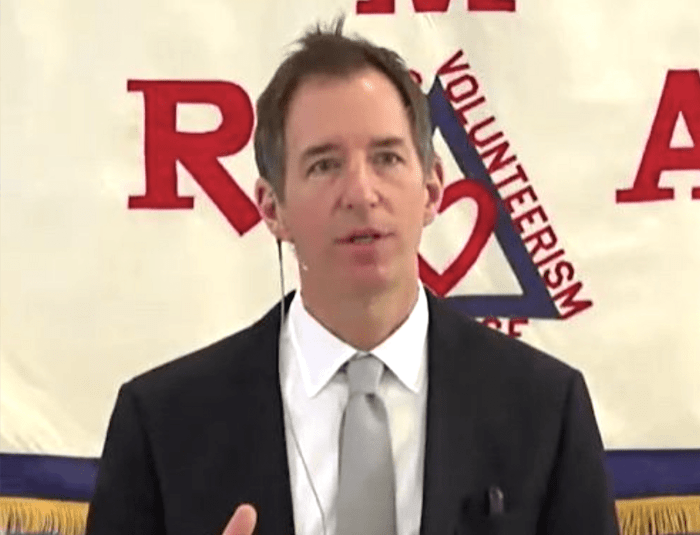
It was a homecoming for Nelson Tebbe, though one delayed by the universal equalizer of a common cold. Standing before the Retired Men’s Association on January 21, the Jane M.G. Foster Professor of Law at Cornell Law School was introduced by a host who knew him better than most: his father, Horst Tebbe. The younger Tebbe, a graduate of Brown University and Yale Law School with a doctorate from the University of Chicago, began his presentation by describing a legal landscape in the midst of a seismic shift. He spoke not merely as an academic, but as a chronicler of a new era in American constitutional life, one he and his colleagues at the University of Virginia, Micah Schwartzman and Richard Schragger, have termed preferentialism.
Professor Tebbe’s presentation focused on how the Roberts Court has fundamentally remade the relationship between church and state. To understand the current moment, he walked his audience through nearly a century of jurisprudence, dividing the history into four distinct eras. He began with the post-war pluralism of 1940 to 1963, a time when the Supreme Court first began to articulate a law of religious freedom that accommodated Protestants, Catholics, and Jews. He noted that Justice Robert Jackson, in the 1943 case West Virginia State Board of Education v. Barnette, famously declared that no official could prescribe what shall be orthodox in matters of faith—a ruling that protected Jehovah’s Witness children from a mandatory flag salute they found sinful.
The second era, separationism, stretched from 1963 to 1990 and looms largest in the public imagination. During this time, the court enforced a high wall between church and state, particularly in public schools. Professor Tebbe highlighted the case of Adell Sherbert, a Seventh-day Adventist whose victory in Sherbert v. Verner established that the government must have a compelling reason to substantially burden an individual’s religious exercise. Similarly, he discussed Jonas Yoder, who successfully argued in Wisconsin v. Yoder that Old Order Amish families should be exempt from compulsory high school attendance to preserve their anti-modern way of life. On the establishment side, Alton Lemon became the namesake of the Lemon test in 1971, which for decades prohibited the government from providing direct financial aid to religious schools.
By 1990, the tide had turned toward deferentialism, an era shaped by the Reagan Revolution’s emphasis on judicial restraint. Justice Antonin Scalia, writing for the court in Employment Division v. Smith, essentially dismantled the protections established by Adell Sherbert. The case involved Al Smith, a Native American man fired for using peyote in a religious ritual. The court ruled that if a law is neutral and applies to everyone, religious practitioners are not entitled to special exemptions.
The current era, which began around 2020, represents a sharp departure which Professor Tebbe described as preferentialism: a combination of a weakened Establishment Clause and a reinvigorated Free Exercise Clause that systematically advantages religious actors. In Carson v. Makin, the court shifted from a rule where the government may not fund religious schools to a rule where it must fund them if it provides tuition assistance to secular private schools. He also pointed to Kennedy v. Bremerton School District, where the court protected Joseph Kennedy, a football coach who insisted on praying on the fifty-yard line after games.
Professor Tebbe noted that Justice Sonia Sotomayor has emerged as a leading voice of dissent in this new era, often arguing that the court is eroding the boundary between church and state. He highlighted Mahmoud v. McKnight, a Maryland case where parents sought an exemption from a public school curriculum that included LGBTQ-inclusive books. To explain this shift, Professor Tebbe cited political polarization and a demographic shift: the rise of the nones, or religiously disaffiliated Americans. These nones now make up nearly 30 percent of the population and skew heavily liberal, while those who remain affiliated with traditional churches skew conservative, making church-state debates increasingly combustible.
The presentation concluded with a look toward the future, where Professor Tebbe predicted a consolidation of this new paradigm, including the possible funding of religious charter schools. When asked about the makeup of the court, he observed that for the first time in history, there are zero mainline Protestants on the bench, a fact that reflects the changing networks of elite legal power. Justice Amy Coney Barrett, for instance, has had to navigate recusals in cases brought by her former colleagues at the Notre Dame Religious Freedom Clinic, highlighting the close-knit world of the conservative legal movement.
The RMA’s next presentation, “The Glimmerglass Festival” by Rob Ainsley, is scheduled for 11 AM on Wednesday, February 4, 2026. RMA presentations are held at Christ Church Greenwich, Parish Hall, 254 E. Putnam Avenue, Greenwich, CT 06830.
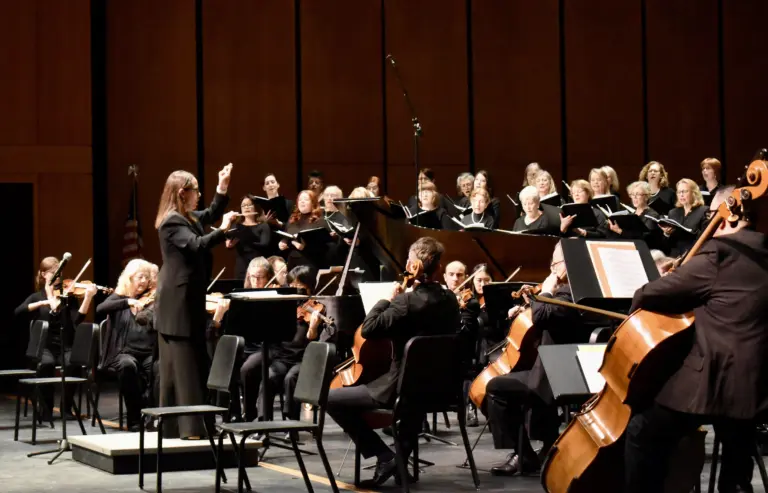
Join Artistic and General Director of the Glimmerglass Festival, Rob Ainsley, and some of the country’s most exciting young opera stars for a thrilling musical dive into the internationally renowned summer festival’s 2026 season.
New York State’s second largest opera company and winner of the 2025 International Opera Award for best musical, the Glimmerglass Festival is based in historic Cooperstown, New York. Offering five mainstage productions and a variety of ancillary events every July and August, it makes for a perfect weekend of art, music, and sightseeing. Performing in a custom-built 918-seat theater with excellent acoustics nestled on the banks of Otsego Lake, coined “Glimmerglass” by author James Fenimore Cooper, the Festival draws crowds of some 30,000 enthusiastic visitors each season from around the world. Over its half-century history, the Festival has also fostered the careers of thousands of artists through its Resident Artist, Apprenticeship, and Artist-in-Residence Programs.
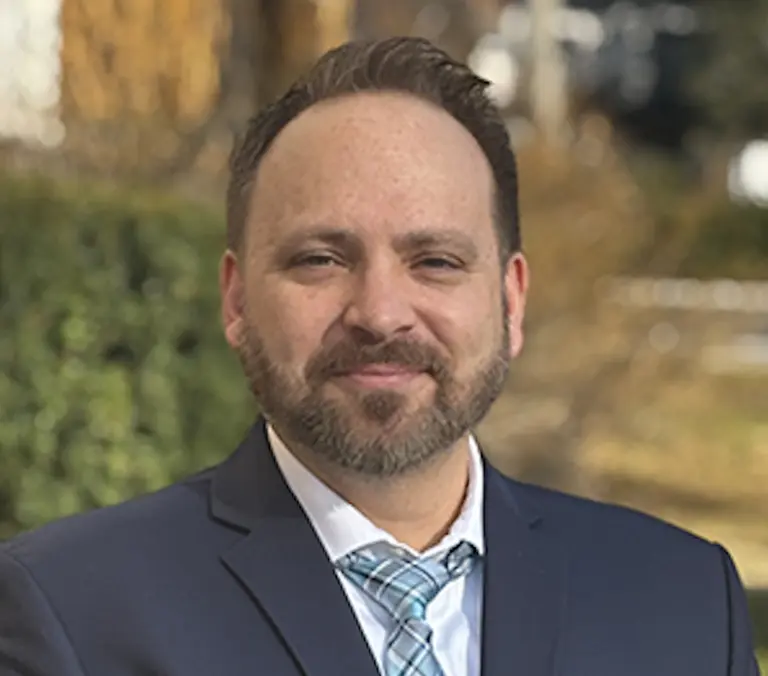
Rob Ainsley is an alumnus of the University of Cambridge, Mannes College of Music, and the Lindemann Young Artist Development Program at the Metropolitan Opera. He served for several years as organist of Christ Church, Greenwich, also founding the Greenwich Music Festival with fellow Christ Church alum Ted Huffman. Since then, he has held leadership positions at Portland Opera, Minnesota Opera, the Opera Theatre of Saint Louis, and Washington National Opera at the Kennedy Center, accompanying singers such as Renée Fleming in recital and speaking on opera and music history to audiences around the country.
To stream the presentation by Rob Ainsley at 11 AM on Wednesday, February 4, click on https://bit.ly/30IBj21. This presentation will also be available on local public access TV channels, Verizon FIOS channel 24 and Optimum channel 79.
Note: The views expressed in these presentations are those of the speakers. They are not intended to represent the views of the RMA or its members.
RMA speaker presentations are presented as a community service at no cost to in-person or Zoom attendees, regardless of gender. Any member of the public who would like to receive a weekly email announcement of future speakers should send a request to members@greenwichrma.org. The RMA urges all eligible individuals to consider becoming a member of our great organization, and thereby enjoy all the available fellowship, volunteer, and community service opportunities which the RMA offers to its members. For further information, go to https://greenwichrma.org/, or contact info@greenwichrma.org.