Wildlife Photographer Melissa Groo Shares Extraordinary Path
By Anne W. Semmes
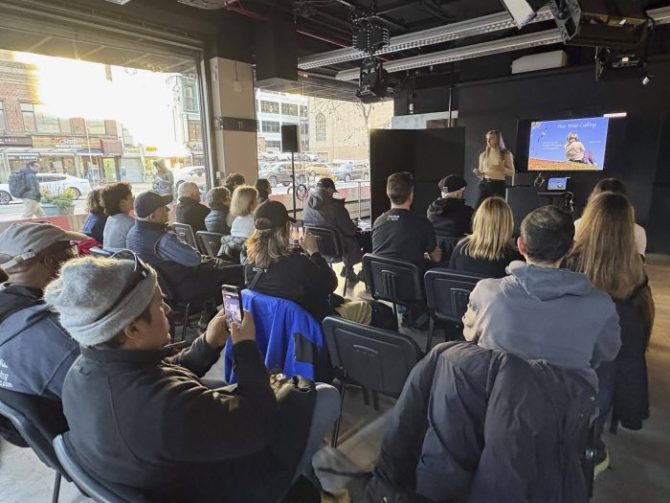
On a recent January afternoon in midtown Manhattan, prize-winning wildlife photographer Melissa Groo addressed some 40 attendees on how she was able to capture that wildlife around the world with help from her Sony cameras. She was invited to do so by Sony at the B&H Superstore on 9th Avenue. Two years ago, she was honored as a Sony ambassador – a “Sony Artisan of Imagery.”
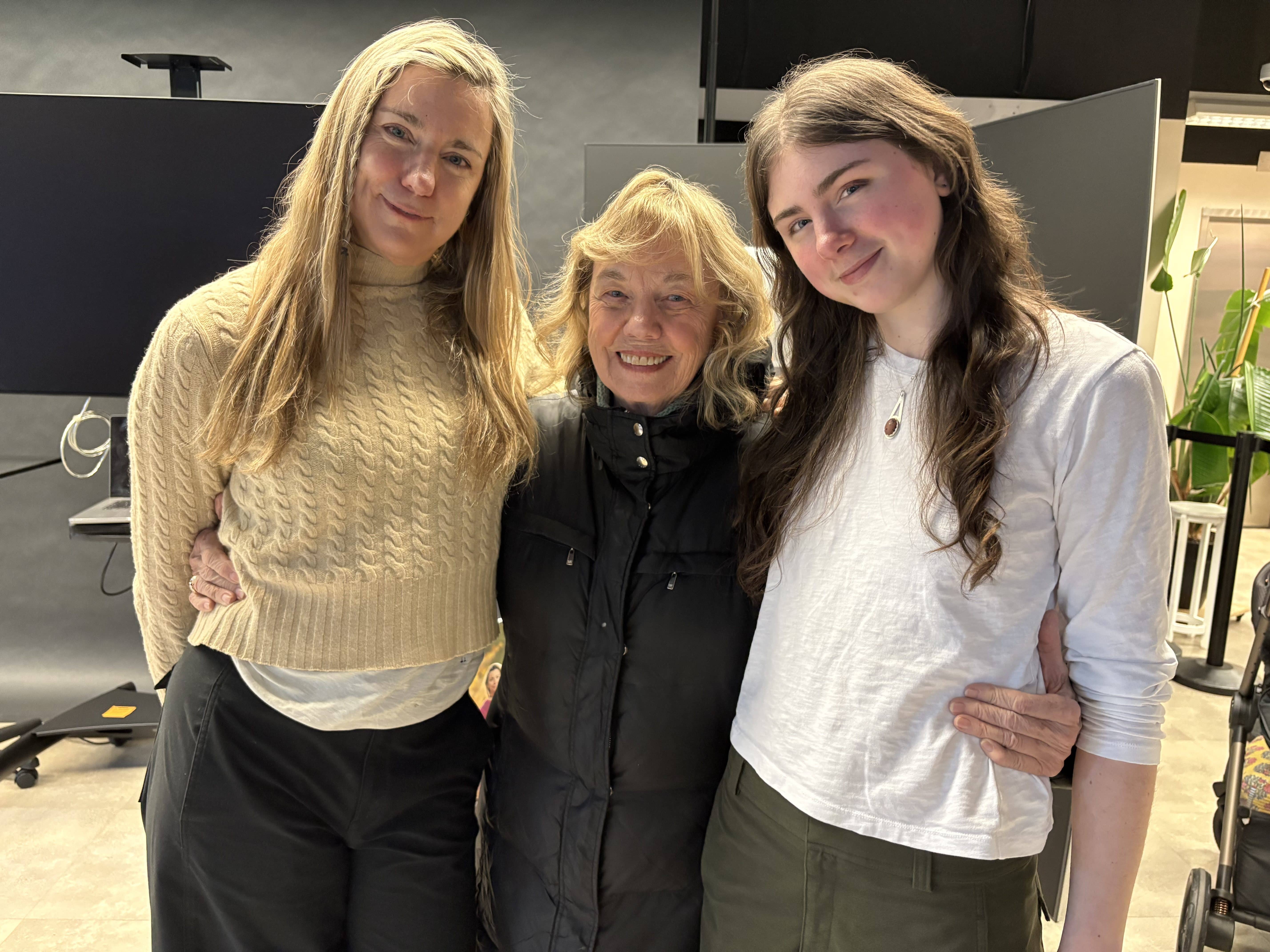
She gave a kind welcome to her mother Anne W. Semmes and daughter Ruby Gelder, then began an “intimate story” of her life and journey into wildlife photography. How she turned professional and evolved into a conservation photographer with a “focus on ethics” that would get her “into some trouble along the way.”
“I was kayaking with my father in Alaska and a humpback whale breached next to the boat then fluked (put its tail up) as it dove down,” she told, and “in that moment, I completely fell in love with humpback whales.” (She is presently on her 7th dive with humpbacks.) It was while she was working in education in Cleveland, Ohio that she would be led to swim alongside humpbacks off the coast of the Dominican Republic, having learned that humpbacks sing songs as discovered by Roger and Katy Payne.
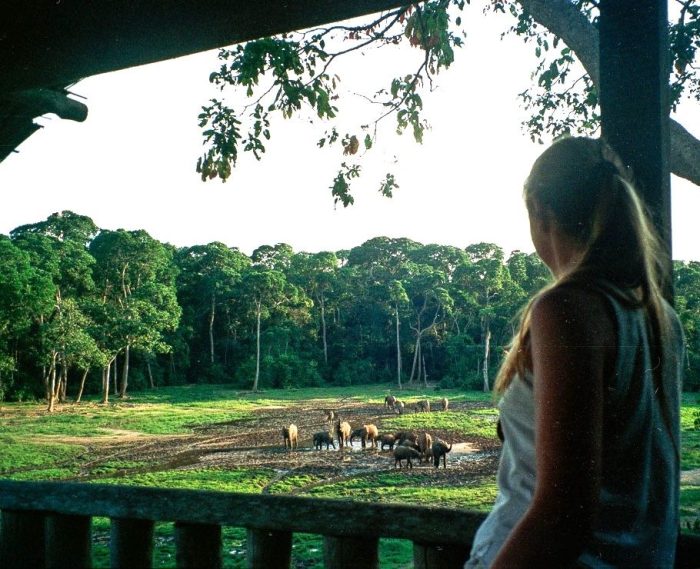
Melissa would wind up swimming with Katy Payne alongside those humpbacks. Katy had serendipitously come to Cleveland’s Museum of Natural History to speak about her most recent finding, that “elephants partly communicate using infrasound below our level of hearing.” Spellbound, Melissa would leave behind her efforts to help low-income school districts to become Katy Payne’s research assistant, which took her to live in the equatorial rainforest of the Central African Republic, studying the communication of forest elephants.
“We were up on a platform looking down on a clearing in the forest where up to 150 forest elephants would gather every day…We’d see big males jousting… babies playing together… greetings between family members that had been separated. Katy assigned me to the video camera – I was not a photographer then. But Katy saw something in me… that I had an ability to predict behavior when it was about to happen… that I had an eye for framing and storytelling.”
Melissa learned, importantly for her photography, “to go down to the ground to get a better eye level of the elephants.” Melissa and Katy would bring their data back to Ithaca, New York, where they lived. “That’s where the Cornell Laboratory of Ornithology is located, where there’s a bioacoustics research program that studies the sound of birds and whales, and elephants.” After five years working for the Elephant Listening Project, Melissa quit to give birth to “this little sprite, Ruby, who’s now in college.”
Melissa’s path to photography
Melissa would take up photography as a hobby, attending a community college offering a basic digital photography course. “At first, I was really into macro, investigating textures and colors and shapes.” Splendidly detailed photographs emerged of flowers, of orchid closeups. But a family vacation in Newfoundland brought birds first into focus. “There’s this spectacular seabird colony there called Cape St. Mary’s, with the largest gannet colony in the world, hundreds of thousands of these birds nesting on these cliffs. You see the chicks, how well camouflaged they are against the rocks.”
The year was 2010 when Melissa “just fell in love with wildlife photography.” “This is what I wanted to pursue.” She would get “the best gear for the job, a top-of-the-line DSLR camera, a 500mm f/4 telephoto lens and a carbon fiber tripod which I used for years…” and was “obsessed with getting birds in flight, especially really fast ducks.” To “seize that moment in flight was really satisfying for me… I was also learning how important it was as a photographer to be at the level of the bird or other animal. For me, it dignifies them in a way, but it also technically throws the background out of focus.”
She spent time in Florida, discovering, “The birds are so tame that you can get away with a 70-200 or 300mm lens. You don’t have to have a big lens because they are very accommodating.” She also spent time on the New Jersey shore, positioning herself tummy-down on the beach. “This is my favorite position when I’m on the beach, photographing waterbirds, shorebirds, getting as low as you can. I know it’s easier for some of us than others, but I’m using a skimmer pod that allows you to have that low intimate feeling.”
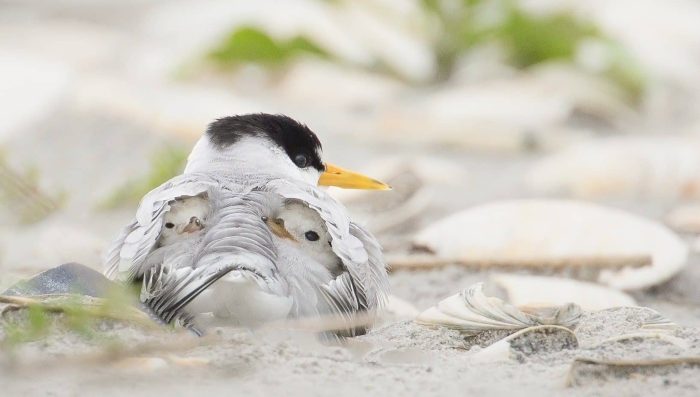
And on those beaches, she encountered a wonder with a Least Tern, her favorite tern species. Spotting a group of them nesting, one stood out with “a grumpy fish face.” She saw the bird had two tiny, newly hatched chicks hidden under its wings. “I’d never seen anything like that.” That photo would go viral, becoming “a really good seller.”
Another capture Melissa made in Florida was coming upon a startlingly white Great Egret, preening in a mangrove on a darkening day. “I exposed for the bird, and everything went dark behind him. It won the Audubon Grand Prize in 2015…It launched a relationship with Audubon that continues to this day. I advise Audubon on ethics and photography content, and travel on assignment for them.”
Targeting different species locations
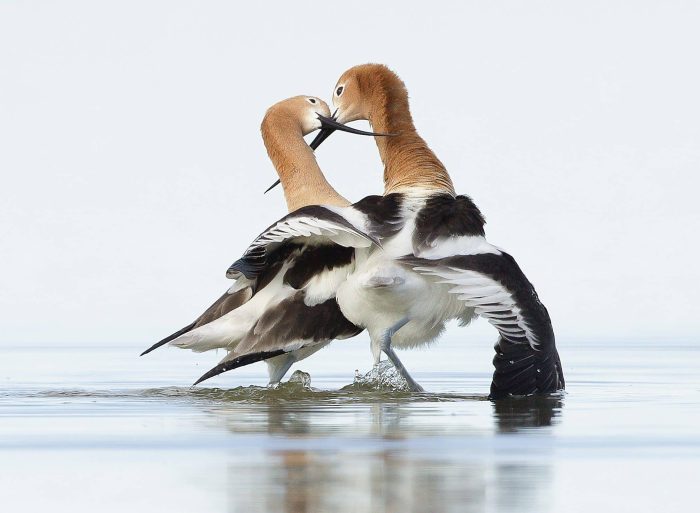
Melissa’s focus would move to target “a particular species in a particular place across the country, usually in a wildlife refuge.” In the Prairie Pothole Region in North Dakota, she found nesting Western Grebes. “With my 600mm lens and teleconverter,” she told, “I approached very slowly… I was able to capture their natural behavior, nest building, and chicks riding on the parents’ back…” Then in Montana at the Bowdoin Lake National Wildlife Refuge, she was able to capture the mating movements of a pair of American Avocets – her favorite shorebird. “They have this elaborate mating ritual… This to me is so beautiful and romantic – I’m always trying to capture this moment.” After mating, the male “puts his wing over the female and for a split second they cross bills and you have to be very fast…that crossing of the bills is just so poetic.”
But Melissa was also making discoveries in her hometown of Ithaca such as the family life of red foxes as seen in a neighbor’s backyard. “The homeowners allowed me to put up a blind, which I like to use so as not to disturb creatures like foxes, especially if there is a sensitive den with young.” She saw “how incredibly diligent and committed and involved father foxes are.” With the mother “mostly away, the father was there, tending to them, grooming them, watching for danger – just an amazing parent.”
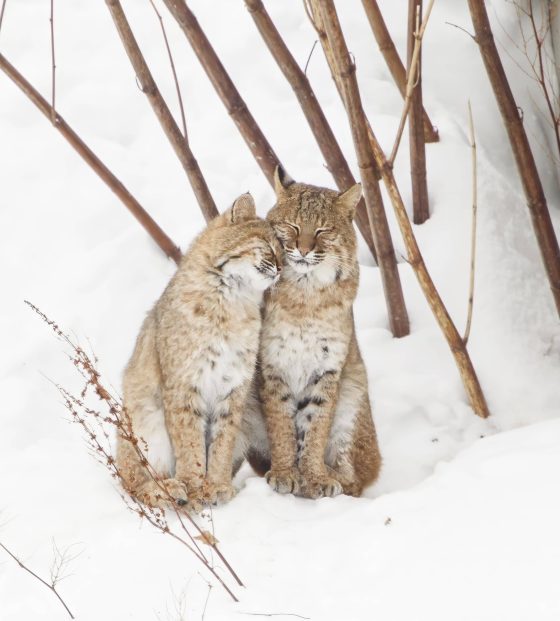
Another special moment in her neighborhood was an alert of a family of bobcats feeding on a deer carcass, it having been hit by a car. “It was a mama bobcat and two kits.” Her resulting photo of the bobcat with one of her kits nuzzling against her became one of Melissa’s signature photos. “To have a moment that shows that they have emotions and connection and family, that I could use this image to try to wake people up with the beauty of these animals, the soul of these animals, is very special.”
“We need these animals in our ecosystem,” she continued, “They provide important rodent control, and they provide magic and mystery to our landscapes.” That bobcat photo she would use to fight against killing contests in the state of New York. “That’s where hunters go out and kill as many foxes, coyotes, bobcats as they can in one day. And we finally got those banned a couple of years ago, thank goodness.”
Becoming a conservation photographer
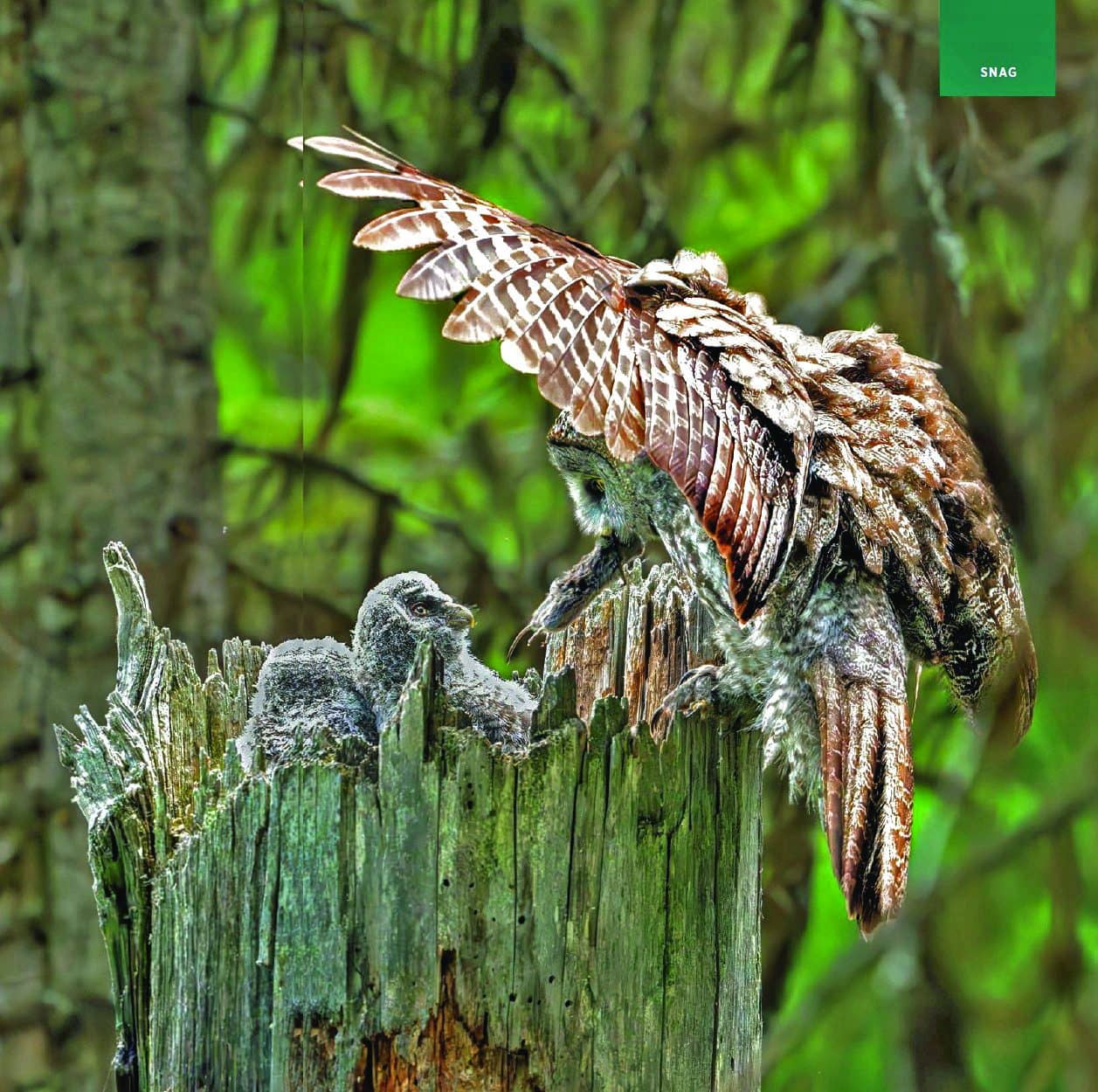
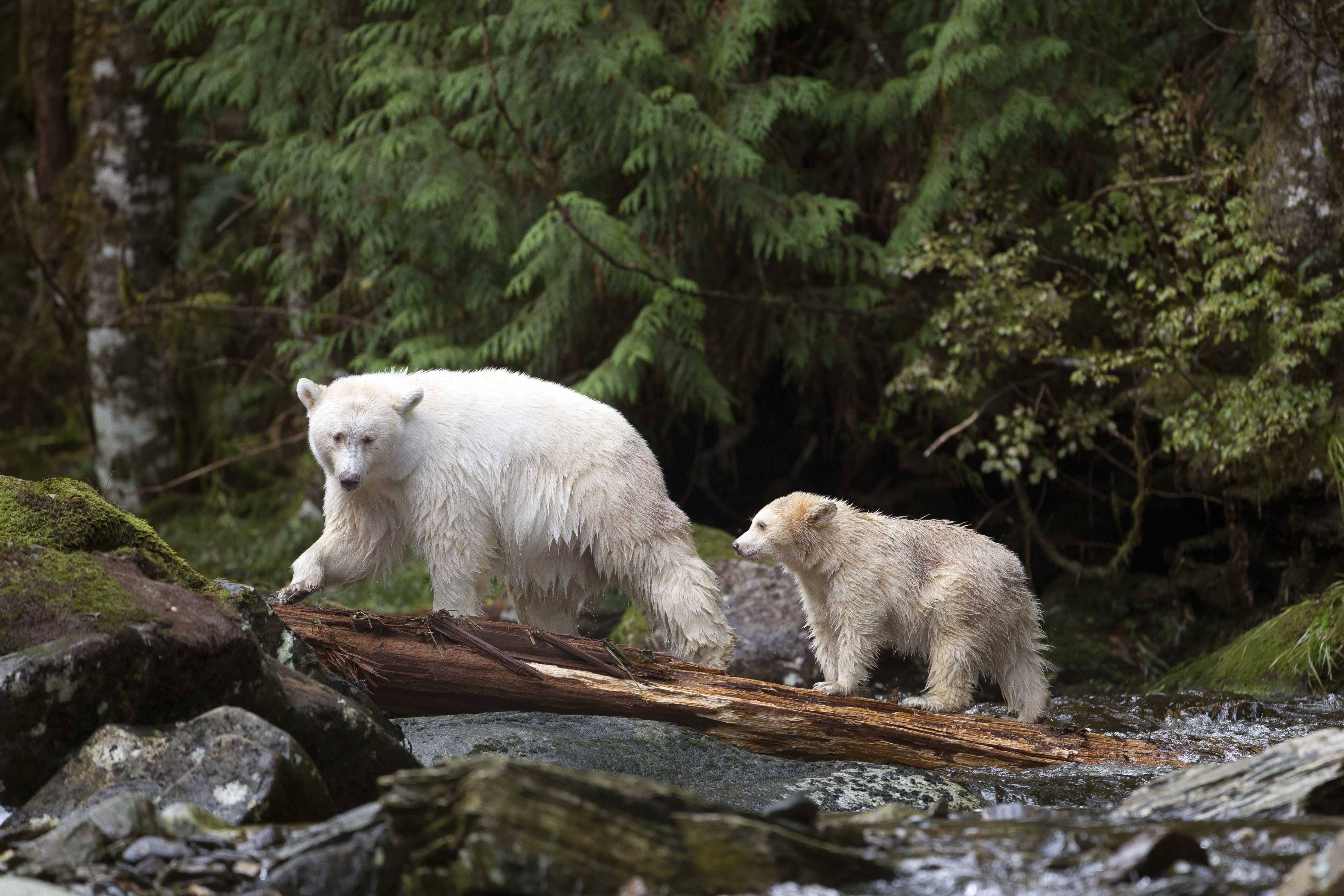
Thus, no surprise Melissa would evolve into a wildlife conservation photographer, as shown in a story she has brought to the current Audubon magazine. “I photographed a story on nesting Great Grey Owls in Montana that highlights the importance of snags, or dead trees. They’re so important and a lot of people think, ‘We have to get rid of all the dead trees.’ But these dead trees can often harbor more life than living trees.”
She would become a Fellow of the International League of Conservation Photographers, having demonstrated her photography had affected the conservation of a species or habitat. She also volunteers as a photographer at Cornell’s Wildlife Hospital. “I want to be able to tell the stories of why these native animals come into the hospital, because I want to offer solutions. So many of them are injured or sickened because of simple everyday decisions we each make.”
Lastly, Melissa addressed what has become a longtime passion for her – ethics in photography. “I began to see as I progressed in wildlife photography,” she said, “that some people were taking shortcuts at the expense of wildlife.” She addressed those concerns in her column on wildlife photography in Outdoor Photographer magazine. “I wrote about 30 articles over the years and often focused on how we as photographers can be really cognizant of and careful about our presence in the field because anytime we’re out there, we’re impacting wildlife.”
“So, what sort of field practices can we follow,” she said, “to allow animals to feel comfortable with us, that we’re not a threat?” Working with well-known birder and author Kenn Kaufman, the two created an online guide for photographers with Audubon. “It’s not rules as much as it is best practices for how we can proceed in the field to keep wildlife safe.” She’s proud to say. “It’s referred to by a lot of people.” (Those guidelines are found at https://www.audubon.org/photography/awards/audubons-guide-ethical-bird-photography-and-videography
Becoming an advocate for wildlife
A further crusade would, as stated in the start of her talk, get her “into some trouble along the way.” “A few years ago, I realized,” she shared, “that a lot of the photos we see of elusive animals look too good to be true, like mountain lions leaping from one boulder to another… I don’t care how much time you’ve been out in the field, you’re not going to get these photos. How is this happening?” She would discover photography game farms. “It’s a little-known photo industry that imprisons wild animals, particularly elusive carnivores hard to see in the wild.”
Those animals “are kept in the most miserable conditions, in small concrete cells, and brought out to perform for treats for paying customers.” She would locate three sites, two in Montana and one in Minnesota, two of which have shut down, leaving Triple D Wildlife in Montana. “They sued me a few years ago for speaking out about them,” she said. “I never said anything untrue. I shared results of USDA inspections and photos, and the knowledge I had about the living conditions of these animals. I was sued for tortious interference.”
Melissa’s revelatory story came out in 2024 in a lengthy exposé in Rolling Stone magazine, alongside that of the woman who had served for years as head trainer at Triple D (also sued). She had left the facility and reached out to Melissa with a request for her help in rescuing those suffering animals. Their ensuing relationship and crusade will be the subject of a forthcoming documentary.
Melissa’s website is melissagroo.com. Prints of her photos are available.
Melissa Groo’s Embrace of Sony Cameras
It was three years ago that Melissa Groo switched to Sony cameras, she told her talk attendees. “I felt they were at the cutting edge of mirrorless cameras, and the best at autofocus and portability. For me, that’s proven to be true.” Her present “workhorse” is the Sony A1 II “which is a fantastic camera and has everything that I need. The Sony A9 III is also an excellent tool.”
She has also recently added the new Sony A7 V to her arsenal and cites it as having “a much lower price than the other two bodies, under $3000, yet with a lot of the same features as the other two. So, it’s a really exciting camera.” The lenses she mostly uses for wildlife are the Sony 600mm f/4, the 300mm f/2.8, and the 200-600mm f/5.6-6.3 lens. I absolutely love those lenses.” She also mentions the 400-800mm f/6.3-8 as “another great wildlife lens, especially useful in Africa, and places like Yellowstone where you get such a variety of wildlife, from huge to small.”
“With all these cameras, now I can get that moment when a bird is just unfurling its wings… Now you’re able to get shots that you were never, ever able to get before. It’s amazing… Some of the great things about the new Sony A7 V are its incredible AI-powered subject recognition, real-time tracking, and excellent autofocus for birds and other animals… And it offers precapture, which allows you to capture moments that happen up to a full second before you fully press the shutter. It’s like going back in time! You know how hard it is to get the dolphin coming up. Just imagine what precapture allows you to get now with a whale breaching, a waterbird surfacing with its catch after diving, or a leopard leaping from a tree.”
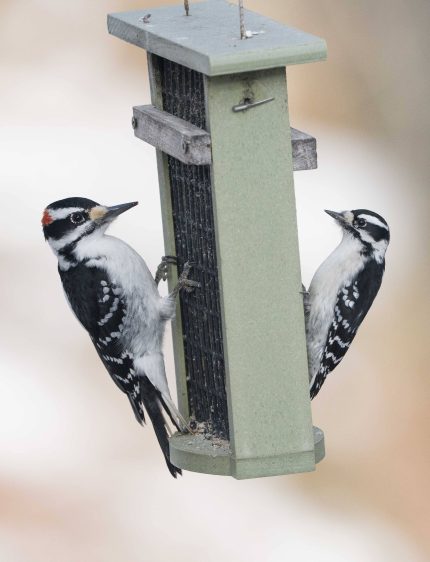
In her captures Melissa had worked long to find the perfect image that shows the size difference between a Hairy woodpecker’s beak and a Downy woodpecker’s beak relative to their heads, “because these birds are so hard to tell apart from one another when they’re not next to each other… they’re always moving so fast and I wanted to get them perfectly aligned.” That moment came with both coming to her suet feeder.
“Because I was using precapture, I was finally able to get the shot. As I was pressing halfway down, I saw the moment happen in a fraction of a second, and then I pressed all the way down and it seized that moment that had just passed. And look at how instructive this is – how much shorter the Downy’s beak is in relation to its head! Anyway, I think that’s cool.”
More information on Sony cameras is available on their website at https://electronics.sony.com/imaging/interchangeable-lens-cameras/