By Emma Barhydt
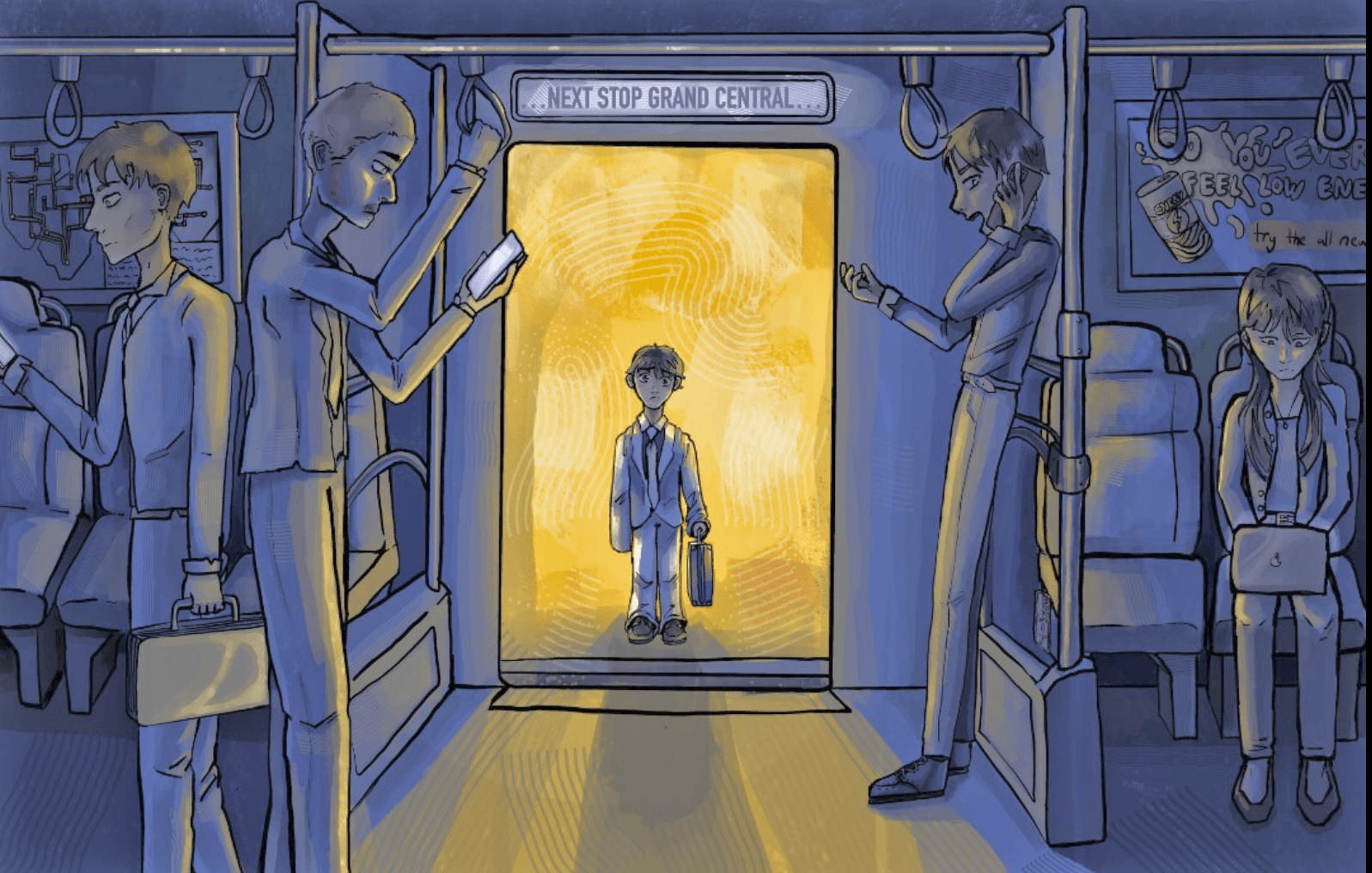
In Juliet Chattaway’s Next Stop, a subway car opens its doors and everything else recedes. A child stands alone at the threshold, briefcase in hand, lit from behind in a wash of amber. The adults around him barely register—faces angled down, bodies absorbed into the familiar choreography of a commute. The moment feels suspended, as if the train has paused not just between stations, but between ways of moving through the world.
It’s an image that doesn’t explain itself, and that’s part of its confidence.
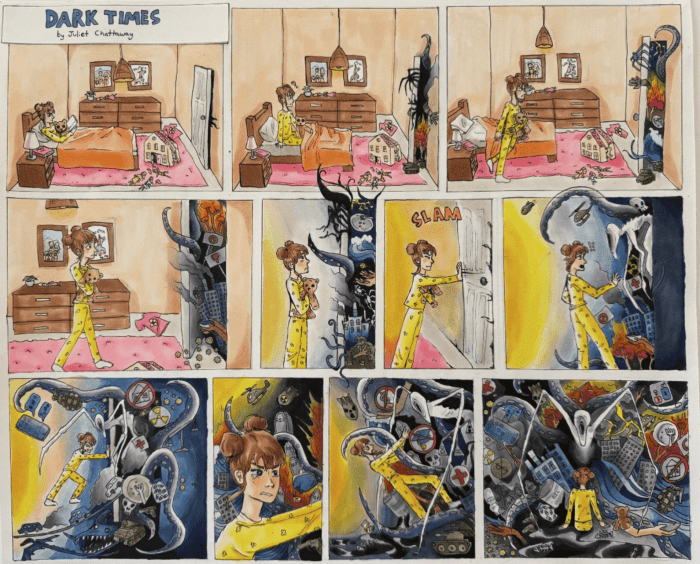
Chattaway, a Greenwich Academy Upper School student, earned a Silver Key from the Scholastic Art & Writing Awards for Next Stop, along with a Gold Key for her illustrated narrative Dark Times. She is one of several GA students whose work was recognized this year by the national program, which each year receives more than 100,000 submissions from students across the United States and Canada.
The awards—Gold Keys, Silver Keys, and Honorable Mentions—span photography, illustration, painting, and mixed media. But taken together, the recognized works share a sensibility that feels less about polish and more about attention. These are images that linger on moments most people pass through quickly: a bus ride, a hallway, a room at night, a stretch of ice under a gray sky.
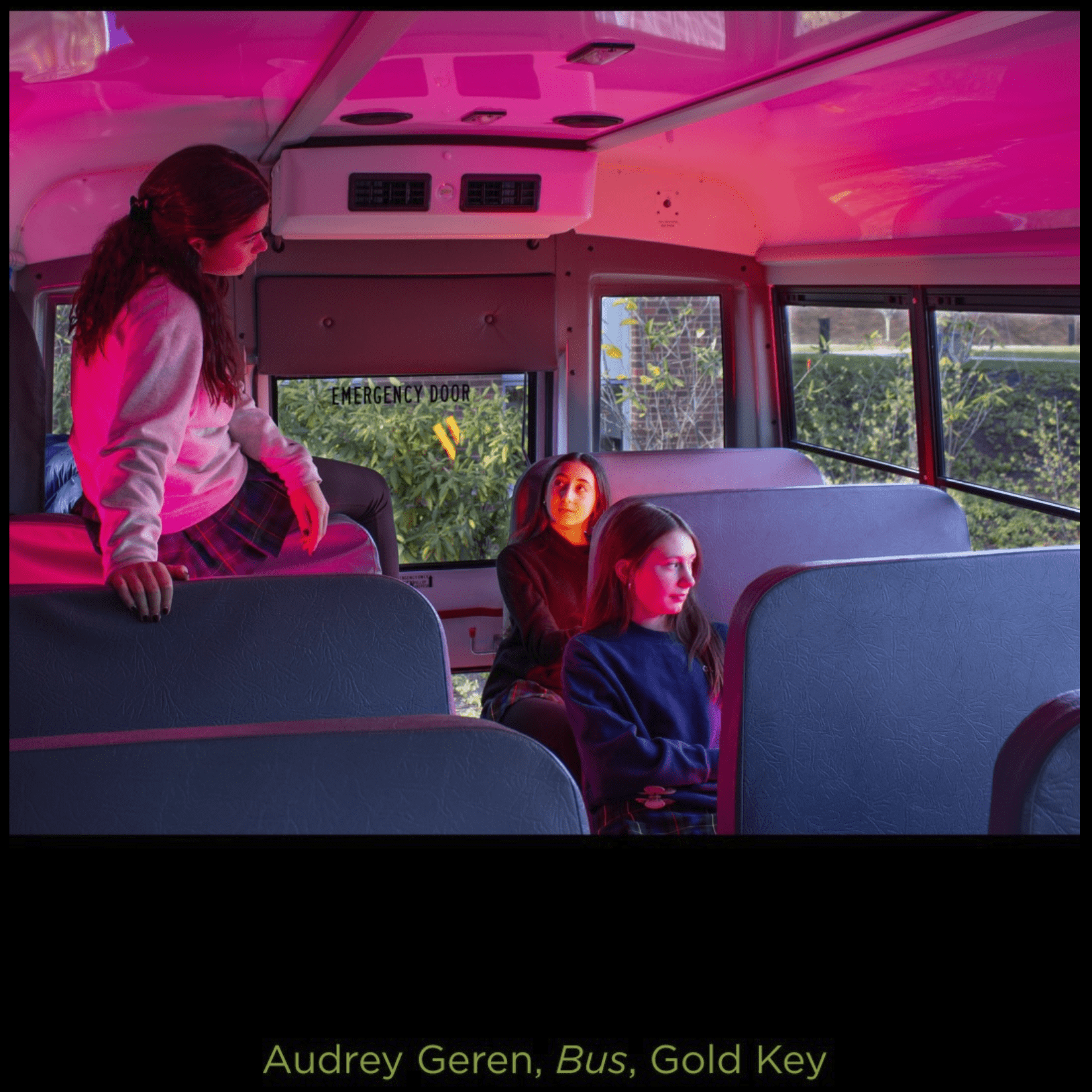
Audrey Geren’s Bus, which received a Gold Key, captures three students scattered across the seats of a school bus. The lighting—deep pinks and reds flooding the interior—transforms the scene into something quietly theatrical. No one is speaking. No one is performing. Each figure appears sealed inside her own thoughts, the bus itself suspended between departure and arrival. It’s a familiar setting rendered strange through patience and framing rather than spectacle.
That restraint shows up again and again.
Charlotte Armstrong’s Gulls, an Honorable Mention photograph, depicts a cluster of birds perched on an iceberg beneath a heavy, overcast sky. The composition is spare, almost stubbornly calm. There’s no dramatic gesture, no visual hook beyond the birds’ quiet persistence. The image asks the viewer to slow down—to notice texture, spacing, light—and rewards that attention.
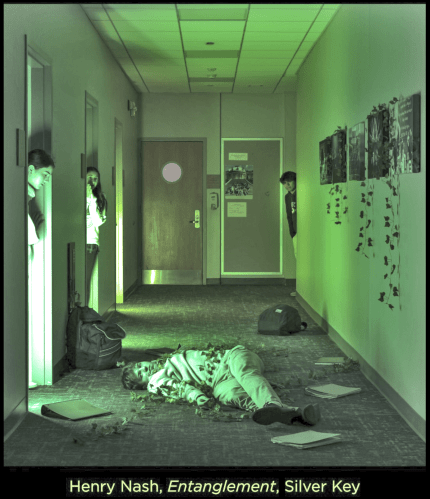
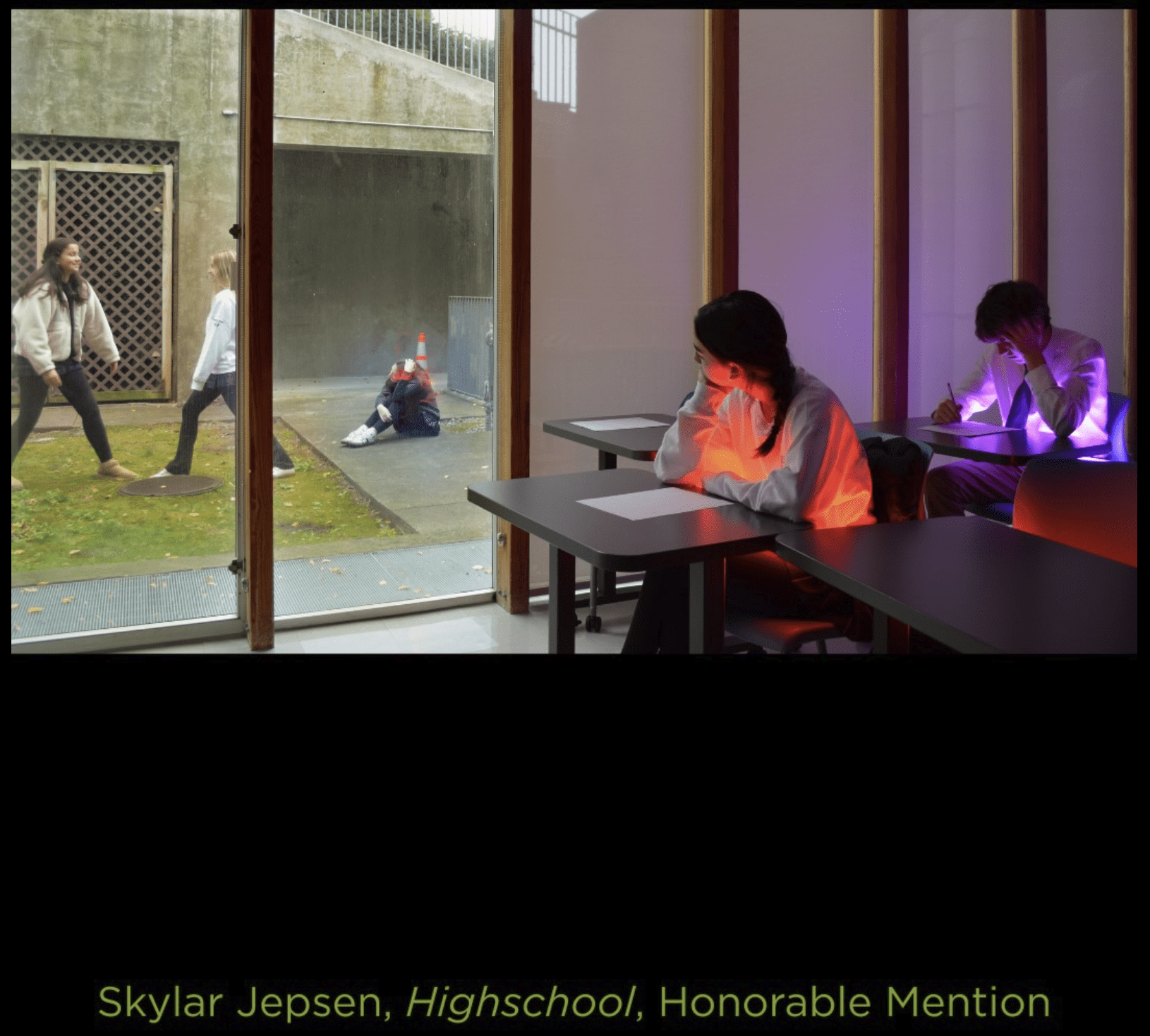
In Entanglement, which earned a Silver Key, Henry Nash stages a tense hallway scene bathed in green light. A figure lies on the floor amid scattered leaves and papers, while others peer out from doorways. The narrative is implied but unresolved, and that ambiguity gives the image its charge. It feels cinematic without feeling staged, unsettling without being explicit.
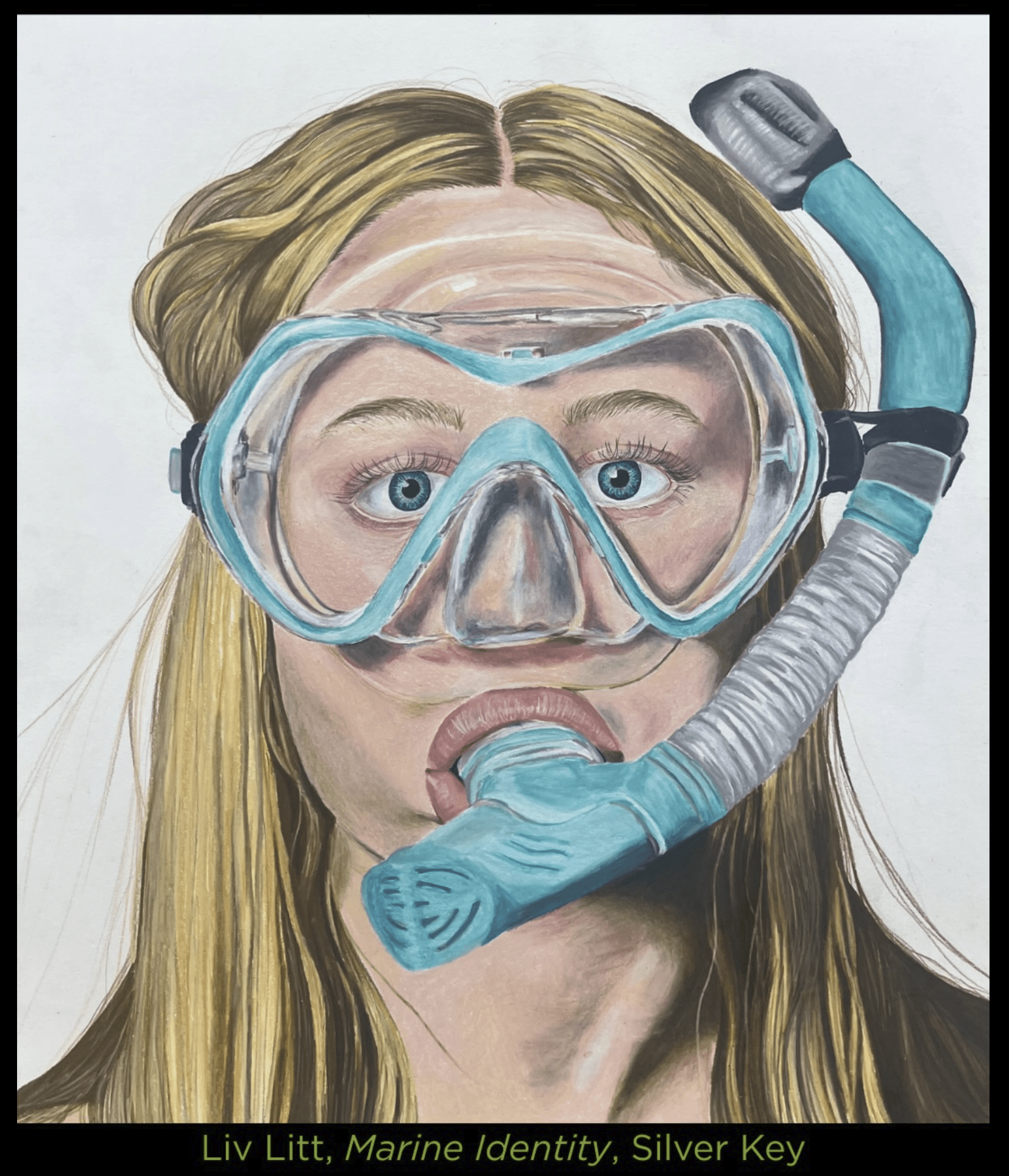
Several of the honored works grapple with identity by playing with distance and distortion. Liv Litt’s Marine Identity (Silver Key) presents a close-up portrait of a girl wearing a snorkel mask, her eyes enlarged and refracted through plastic and glass. The effect is both playful and disorienting, raising questions about how we see ourselves through layers—of environment, of expectation, of performance.
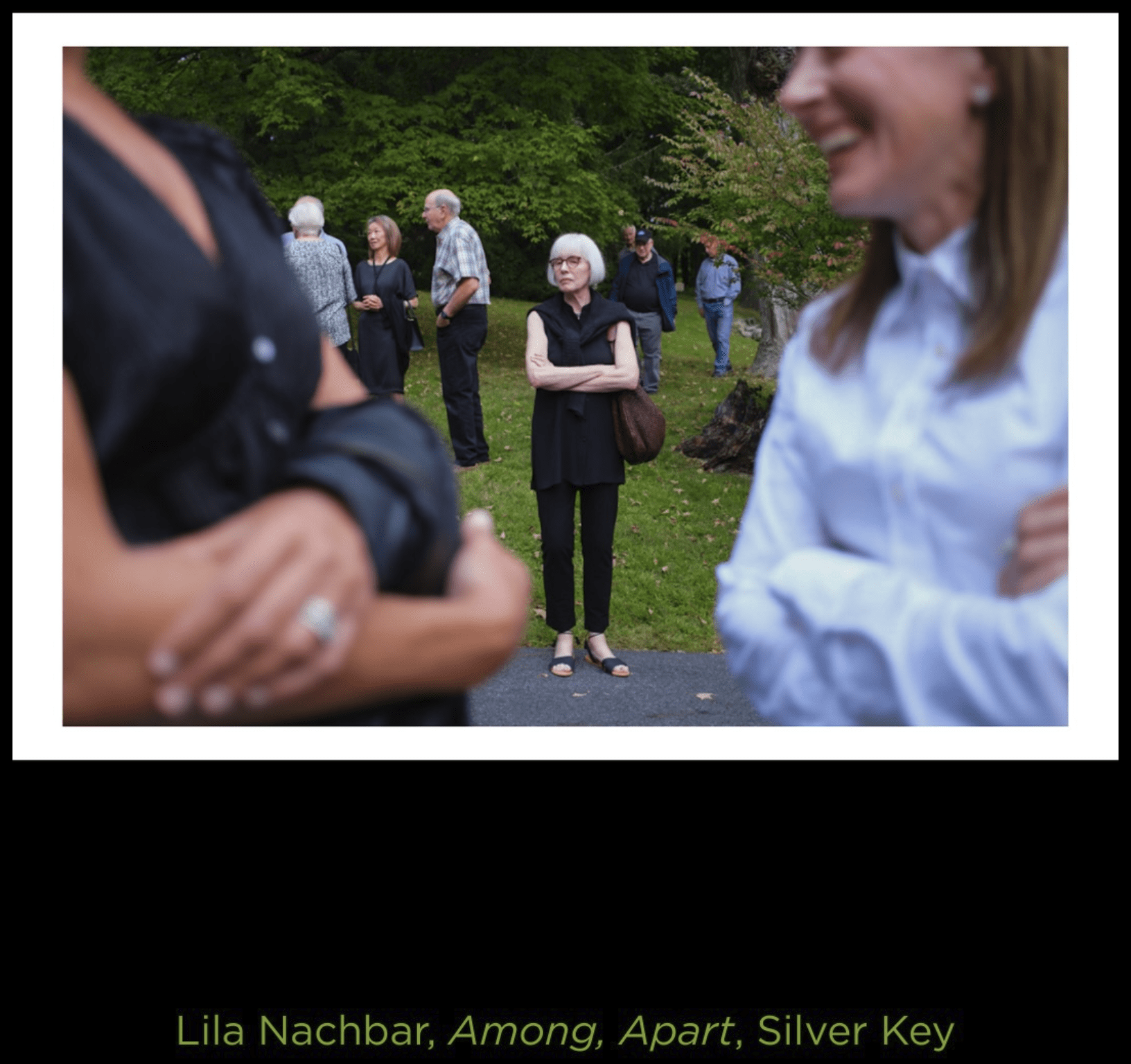
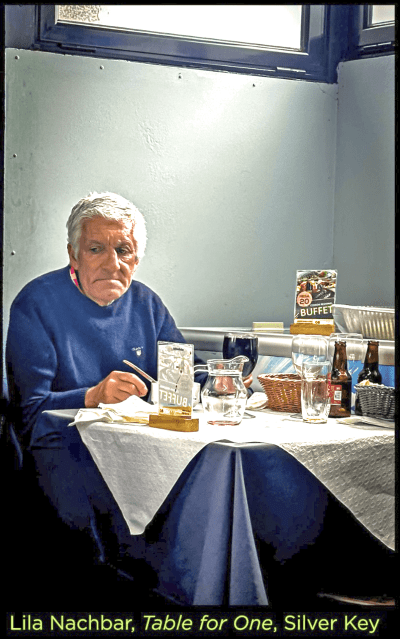
Lila Nachbar’s Among, Apart, also a Silver Key recipient, isolates its subject in sharp focus while others blur into the background. The photograph captures a feeling that’s instantly recognizable: being physically present while emotionally elsewhere. Claire Fugelsang’s Behind the Rod (Silver Key) uses saturated red light and architectural symmetry to build a sense of anticipation that feels almost theatrical, though the space itself remains ordinary.
Juliet Chattaway’s Dark Times, meanwhile, moves decisively into narrative. Told through comic-style panels, the piece follows a young girl as her bedroom—warm, contained, familiar—gives way to a chaotic outside world populated by tentacled forms, warning symbols, and looming threats. The style is vivid and animated, but the emotional arc is controlled. Fear accumulates slowly. The work never tips into melodrama.
That control is notable across the board. These students aren’t rushing to make statements. They’re observing, revising, and trusting viewers to meet them halfway.
The Scholastic Art & Writing Awards have long been distinctive for the freedom they grant young artists: students are encouraged to explore any subject, and no work is disqualified based on content. That openness shows here—not in shock value, but in the seriousness with which these artists treat their own ideas. The work feels considered, not cautious.
For a school community, recognition like this can be tempting to frame as a milestone or a launchpad. But the more compelling story is smaller and closer to home. These images suggest hours spent adjusting light, reworking compositions, rethinking narratives. They reflect classrooms where process matters, where students are given time to look closely and take risks without being rushed toward conclusions.
The result is work that feels grounded and alert. It doesn’t chase trends or overreach for symbolism. It pays attention to what’s right in front of it.
These artists are early in their trajectories, and that’s precisely what gives the work its energy. There’s urgency here, but also patience. Curiosity without cynicism. In buses and bedrooms, subway cars and school hallways, they are mapping the world as they encounter it now—quietly, carefully, and with a clarity that’s hard to teach but easy to recognize when you see it.
And it’s worth stopping to look.