By Liz Leamy & Elizabeth Barhydt
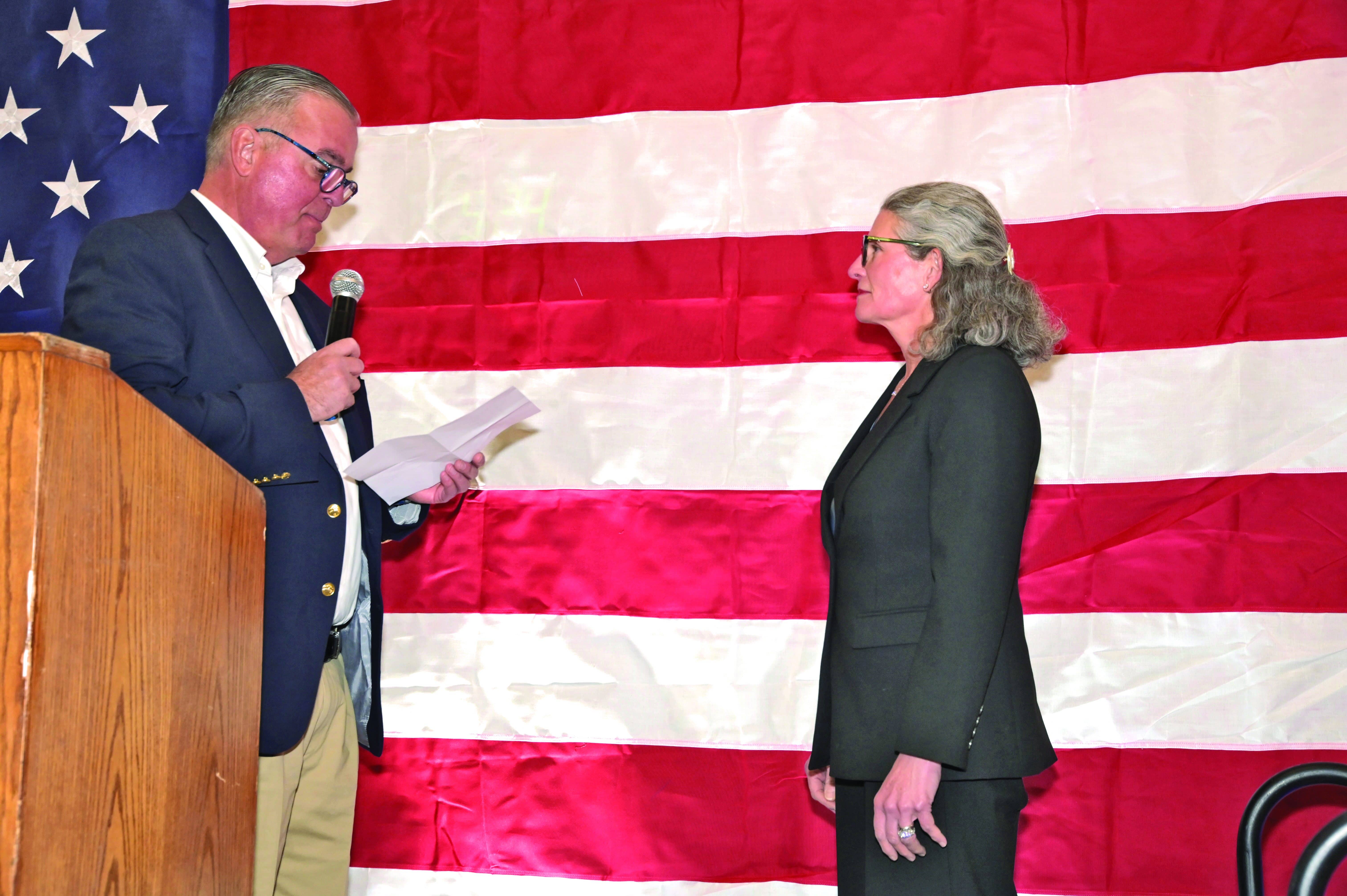
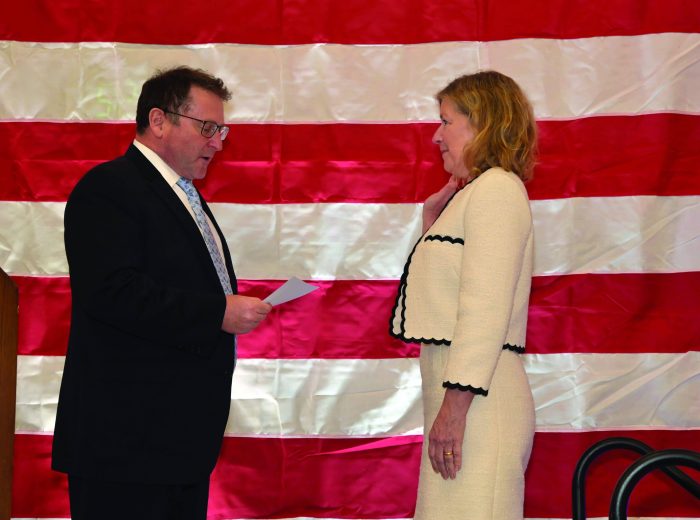
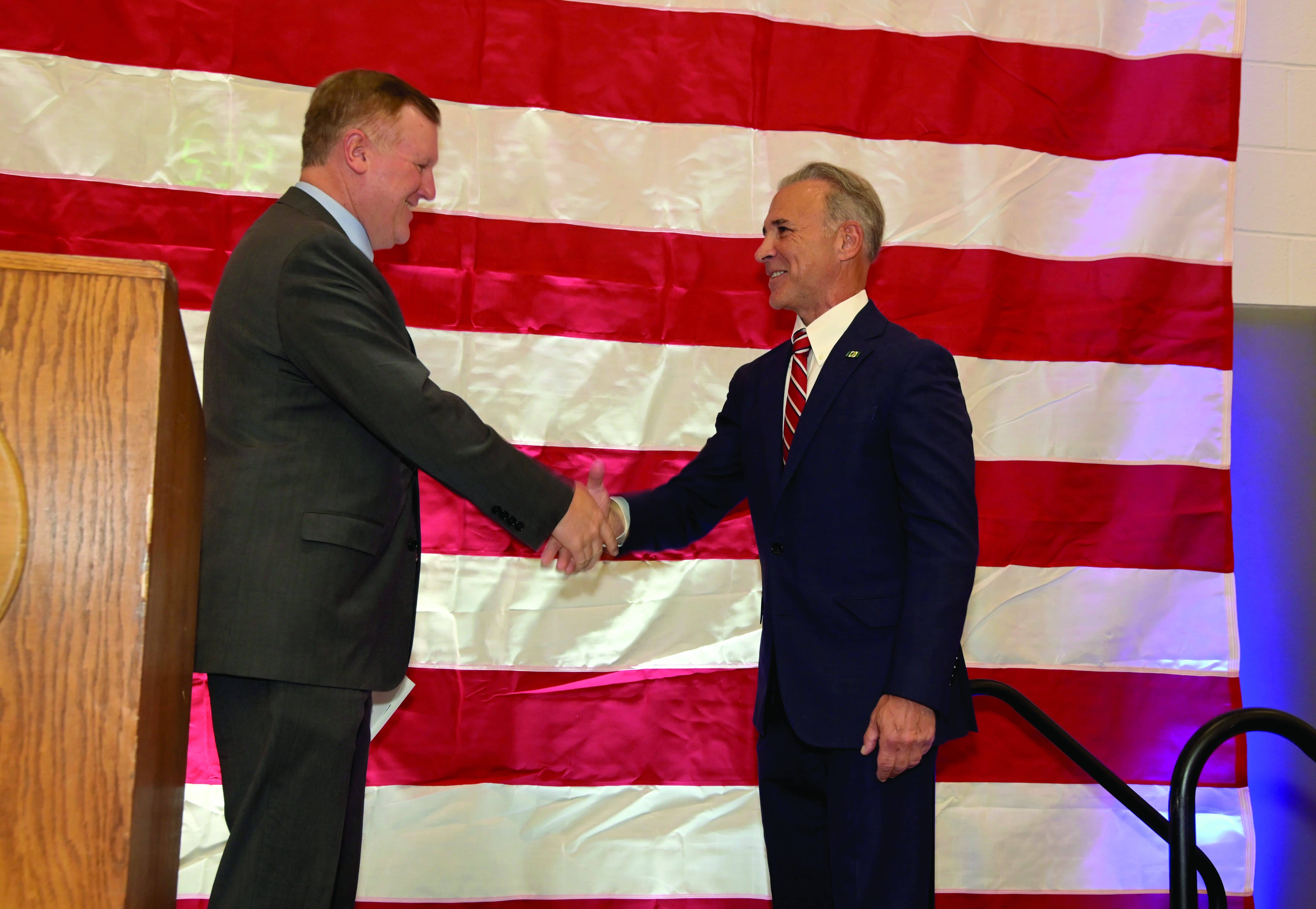
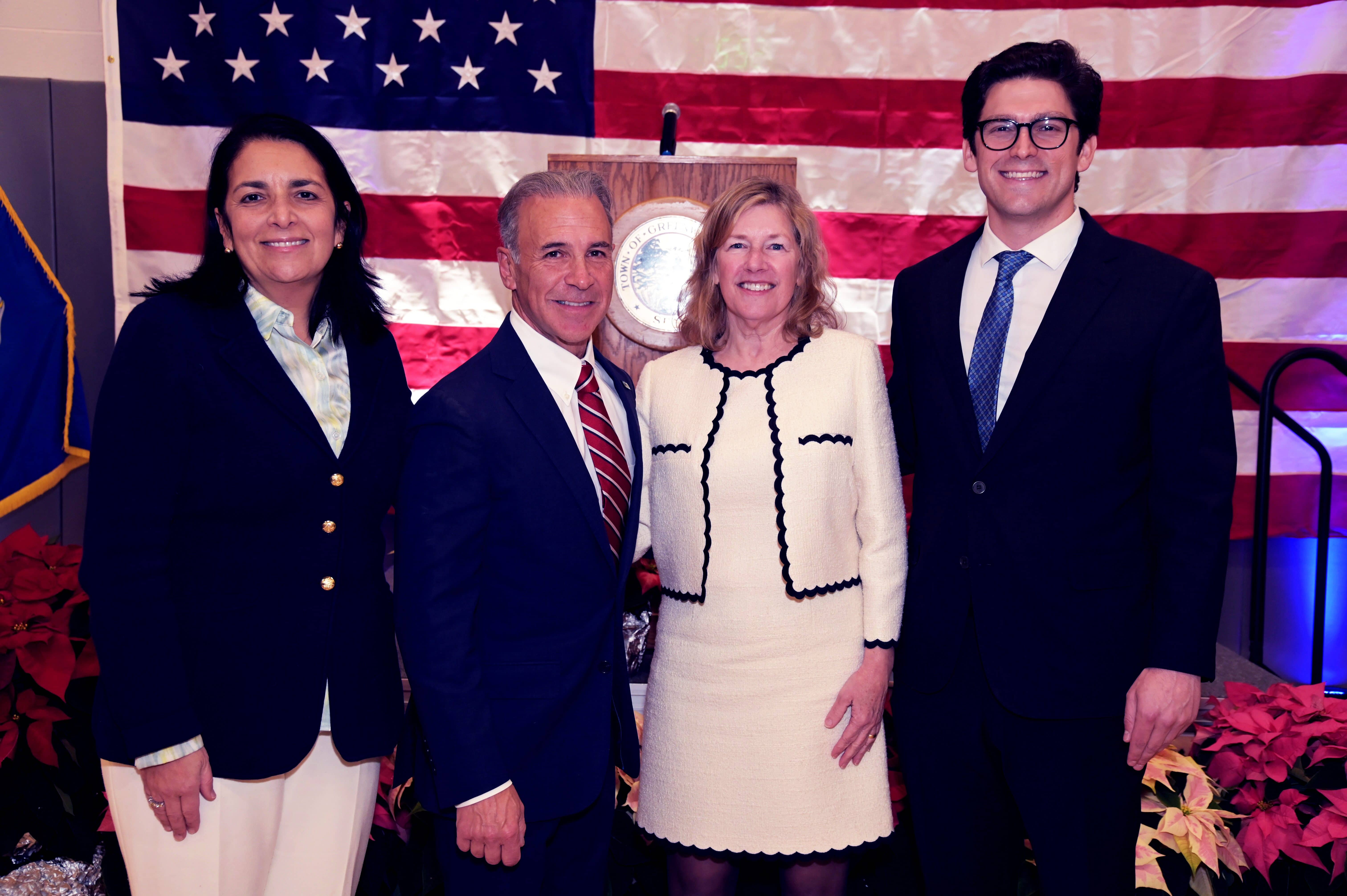
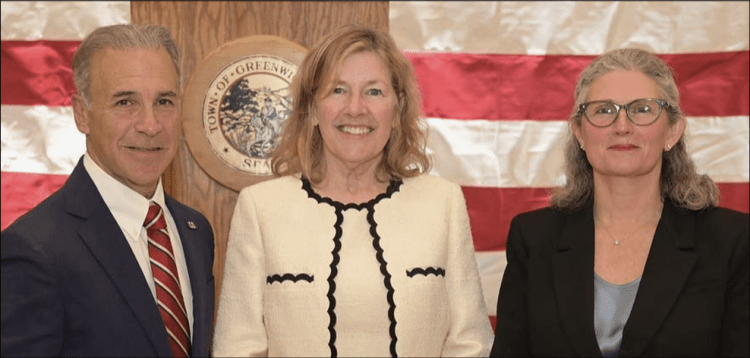
Greenwich marked the start of a new municipal term this week, swearing in its Board of Selectmen—First Selectman Fred Camillo, Selectwoman Lauren Rabin, and newly elected Selectwoman former State Rep. Rachel Khanna—in a ceremony held at the town’s newly completed Civic Center. The event blended institutional formality with the subdued pride characteristic of Greenwich public life, set against the backdrop of an election notable for its steadiness at the top of the ticket and its decline in overall turnout.
The Board of Selectmen, the executive leadership of the town, is charged with administering municipal operations, prioritizing capital projects, and shaping the agenda that guides Greenwich’s day-to-day affairs. Camillo, who secured 10,302 votes, maintained his long-standing position as the town’s leading vote-getter, continuing a pattern of electoral consistency across four cycles. Rabin, who first took office in 2019, begins her fourth term. Khanna, a former state representative, now joins the three-member board after placing in the top three on the ballot.
The evening’s proceedings unfolded in a building whose own history offered a reminder of Greenwich governance— the Civic Center renovation was first proposed decades ago, revised repeatedly, and only now brought to completion. The symbolism was not lost on Camillo, who would later cite the project as an example of the need for more timely decision-making. But before he spoke, Father Robert McIntosh opened with an invocation calling for unity of purpose and sound judgment, noting that he felt “part of the community” and was honored to bless its leaders.
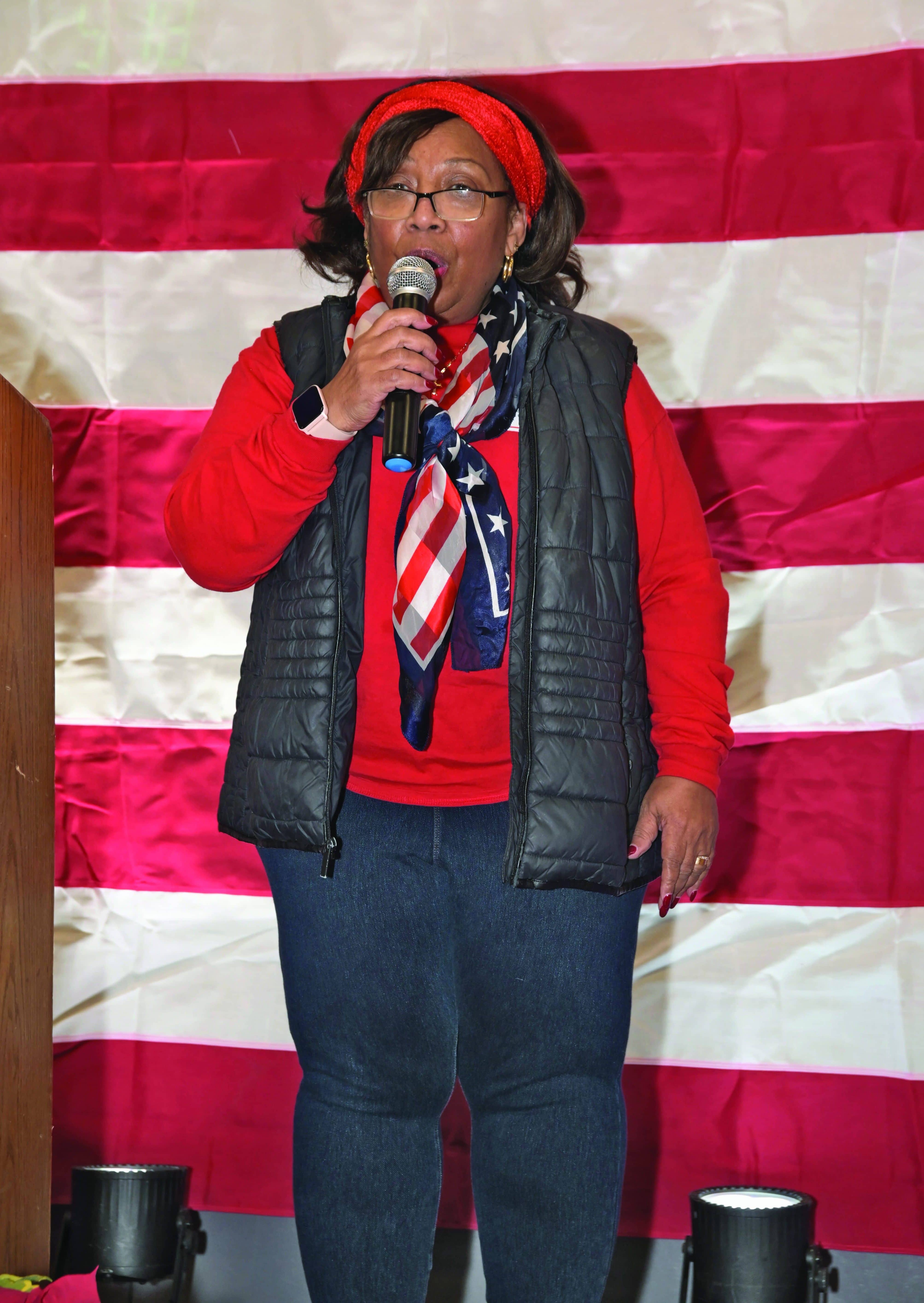
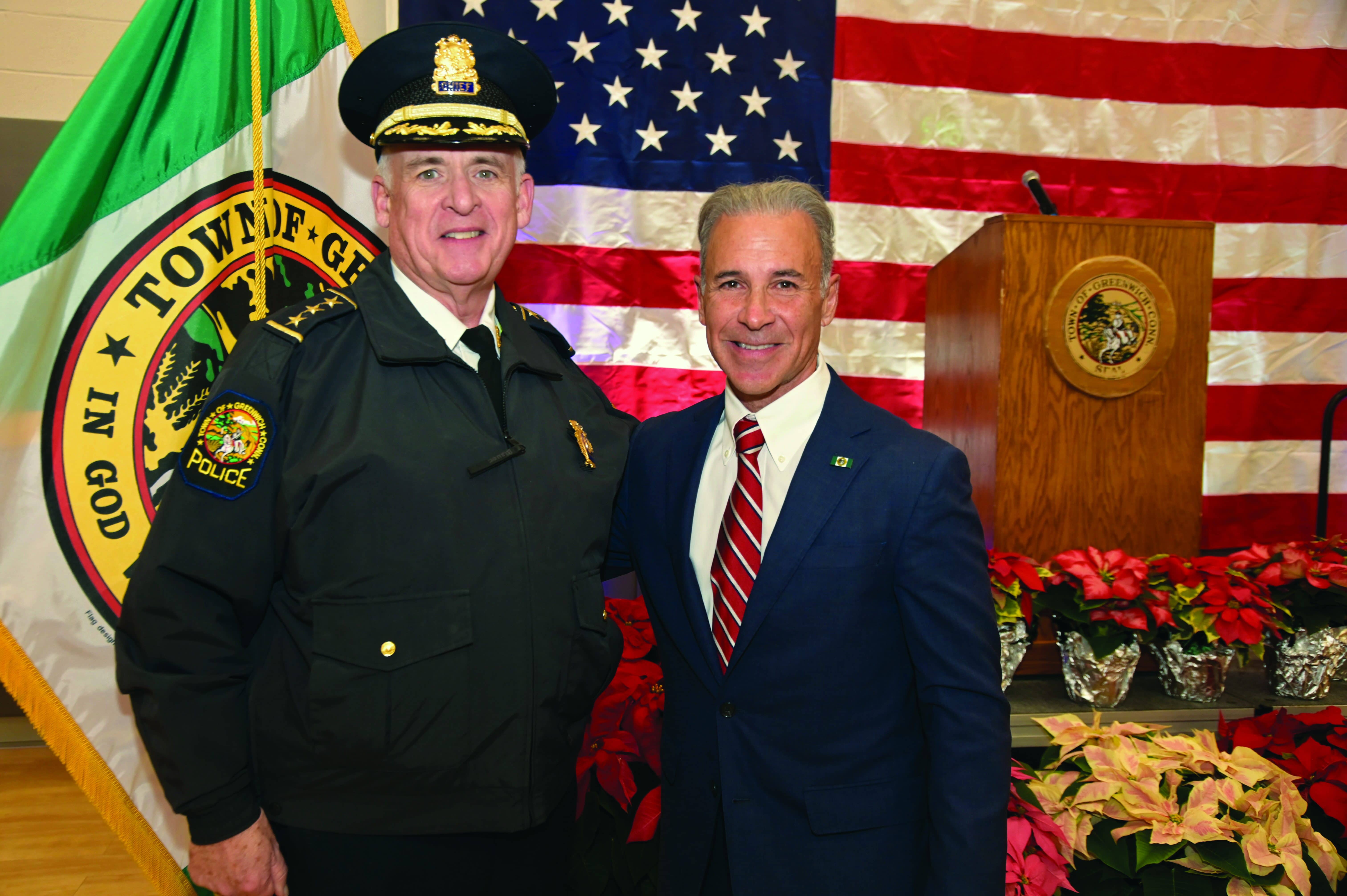
Former State Senator Scott Frantz, serving as master of ceremonies, praised Greenwich’s public-safety agencies and the new building itself. He described the town’s safety and police departments as “outstanding” and welcomed residents to what he said he believed was “the best Civic Center in the entire country.” Later, as the program drew to a close, he told the crowd that it was “heartening to see such a large, positive crowd that cares deeply about this community,” adding that Greenwich remains “one of the best towns in the country” and inviting attendees to stay for refreshments and “one last round of applause” for their leaders.
As the crowd settled in, the outcome of the election lingered in a room full of active civic participants. Voter turnout declined this time to 45.2 percent, down from 50.9 percent in 2023. Republicans showed the sharpest falloff—51.1 percent participation compared with 62.4 percent two years earlier—while Democrats held steady at 52.5 percent. Unaffiliated turnout declined from 40.7 percent to 35.5 percent. Early voting, offered for the first time in a municipal cycle, did not reverse the downward shift.
Despite turnout declines, Camillo outperformed the rest of the ballot, a fact that many attendees cited as evidence of continued confidence in his administration. Some referenced fiscal steadiness; others pointed to the practical nature of town governance. State Rep. Tina Courpas, attending the ceremony, told the Sentinel that Greenwich remained “the best place to live, work, and raise a family,” noting her expectation that the new board would “keep it that way and elevate it further.”
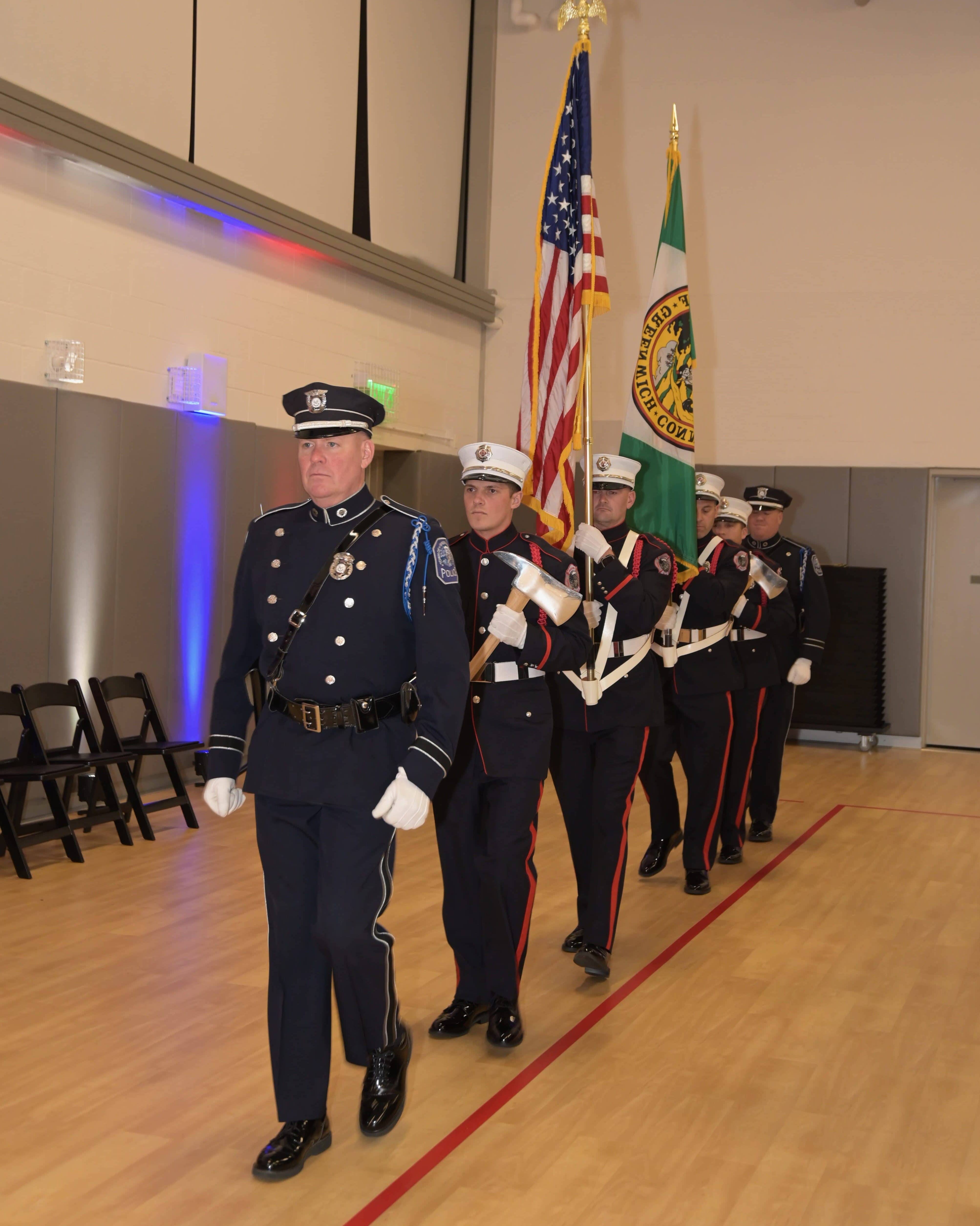
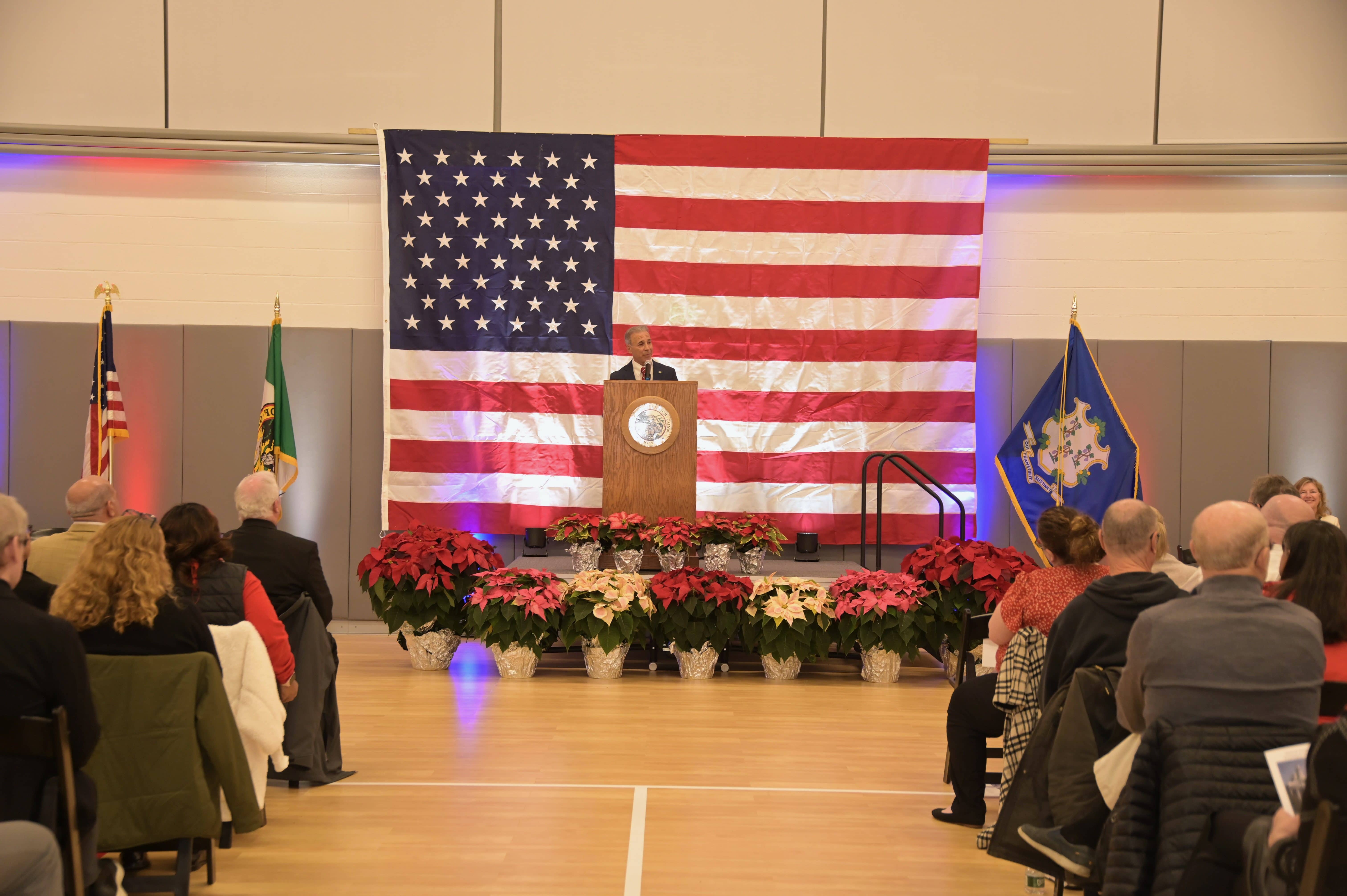
When First Selectman Fred Camillo stepped forward, he began by thanking town departments, Parks and Recreation staff, fire and police personnel, and the Honor Guards present for the ceremony. He acknowledged his family, many of whom were in attendance, and his campaign volunteers, whom he called “friends” more than political allies.
Camillo returned to themes he first articulated six years earlier at his inaugural ceremony: public safety, environmental protection, revitalization of the central business district, and maintaining affordability. “We talked about invigorating Greenwich Avenue because in 2019 it wasn’t doing well,” he said. “We talked about getting things done while keeping taxes affordable. That has been done.”
He used the Civic Center as a demonstration of both achievement and caution. The building was proposed decades ago, opposed, delayed, revised, and only now completed. “We lost three decades and millions of dollars,” Camillo said. He urged the town to act with greater decisiveness on future projects: “Ask the good questions, but get to yes quicker. That is time and money we don’t get back.”
He emphasized cooperation, noting what he described as a “new spirit” on the town’s fiscal bodies and urging future discussions to focus on outcomes rather than intractable disagreement. “The town remembers the people who get things done,” he said. “Two years from now, let us not talk about what we wanted to do. Let us talk about what we did together.”
Rabin’s remarks were anchored in her six years in office. “Serving my hometown remains one of the greatest honors of my life,” she said. She reviewed progress in public safety, technology modernization, school construction, and accessibility improvements. She emphasized that leadership depended on “listening, learning, and following through,” grounded not in pronouncements but in steady constituent contact— in grocery stores, at neighborhood meetings, and in late-night emails from residents seeking clarity.
Khanna’s remarks were among the evening’s most personal. She recounted arriving in the United States as a child who spoke no English, enduring the benign cruelties of childhood—classmates amused by her accent, packed lunches out of step with American norms. Those experiences, she said, taught her to adapt, work hard, and participate fully in civic life. “I never imagined I’d become a state legislator and now Selectwoman for Greenwich,” she said, pledging to lead with “transparency, accountability, and inclusion.”
Among the residents in attendance, reactions to the election were clear. Caren St. Phillip, a lifelong Cos Cob resident and small business owner interviewed at the event, said she was “glad to see the selectmen sworn in,” adding that small businesses depend on “leaders who keep the town safe, functional, and predictable.” She has known Camillo since childhood and described his reelection as “continuity that matters.”
Anthony Johnson, CEO of Greenwich Communities, said in an interview that Camillo “has long supported housing efforts,” and that Johnson viewed the new board as positioned to advance long-discussed projects.
Longtime resident and volunteer Ted Berenblum, interviewed after the ceremony, said he thought it was “a wonderful event” that “showed a lot of unity and support for the Selectmen,” and reflected “a spirit of cooperation and a lot of pride in this town where so many wonderful things are being done.” Berenblum, who grew up with Camillo and remains active on town boards, said he was “very proud” of the direction of the Civic Center and other projects.
Board of Education member Paul Cappiali, also speaking with the reporter, called it “a privilege” to witness the swearing-in. He said he saw the evening as representing “all of the other elected officials” serving the town and emphasized “Republicans and Democrats working on democracy together for the best town of Greenwich that we could possibly have.” Cappiali, whose family has lived in Greenwich for generations, said he “bleeds green” and described it as “heartwarming” to raise his own children in a place with such facilities, opportunities, and civic engagement.
The ceremony closed with a benediction from Rabbi Yossi Deren, who prayed for wisdom, strength, and integrity for the town’s leaders. The applause that followed was steady and unembellished—the kind Greenwich typically offers its public servants: respectful, expectant, and rooted in the town’s long tradition of