By Emma Barhydt
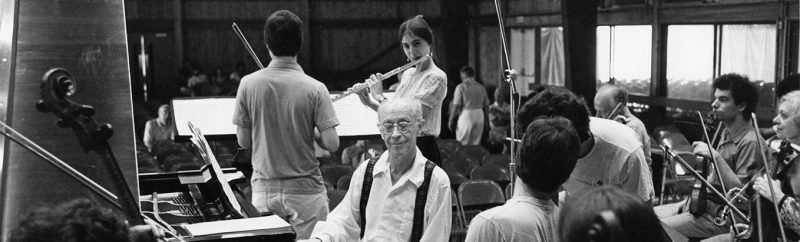
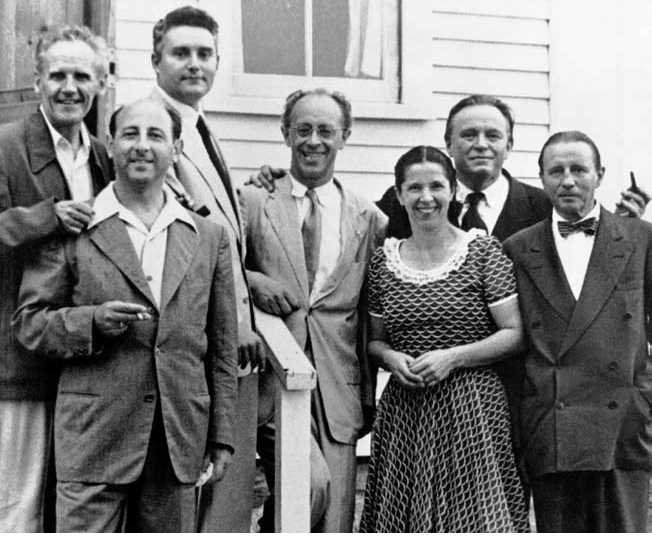
When the Musicians from Marlboro perform at Greenwich Library’s Berkley Theater on November 23, they’ll arrive with a lineage that stretches back more than seventy years to the hills of southern Vermont. Since its founding in 1951 by pianist Rudolf Serkin and a group of European émigrés, Marlboro Music has been less an institution than a gathering—a place where generations of artists have come to think together about sound, form, and the unspoken discipline of playing well with others.
That approach shows in the programs the ensemble brings on tour. This month’s concert includes Britten’s Phantasy Quartet, Shostakovich’s String Quartet No. 8, and Mendelssohn’s String Quintet in A Major—works that, taken together, form a kind of conversation across time. Each asks its players to listen inwardly as much as outwardly, to balance precision with empathy.
Britten’s youthful Phantasy Quartet opens the afternoon, its structure anchored by Donovan Bown’s oboe. Written in 1932, the piece already shows the hallmarks of Britten’s later writing: a fascination with clarity and a willingness to test the limits of traditional form. Against the luminous tone of the oboe, the strings weave in and out of alignment, never quite settling into symmetry. The result is a work that feels exploratory yet complete, the product of a young composer confident in his sense of proportion.
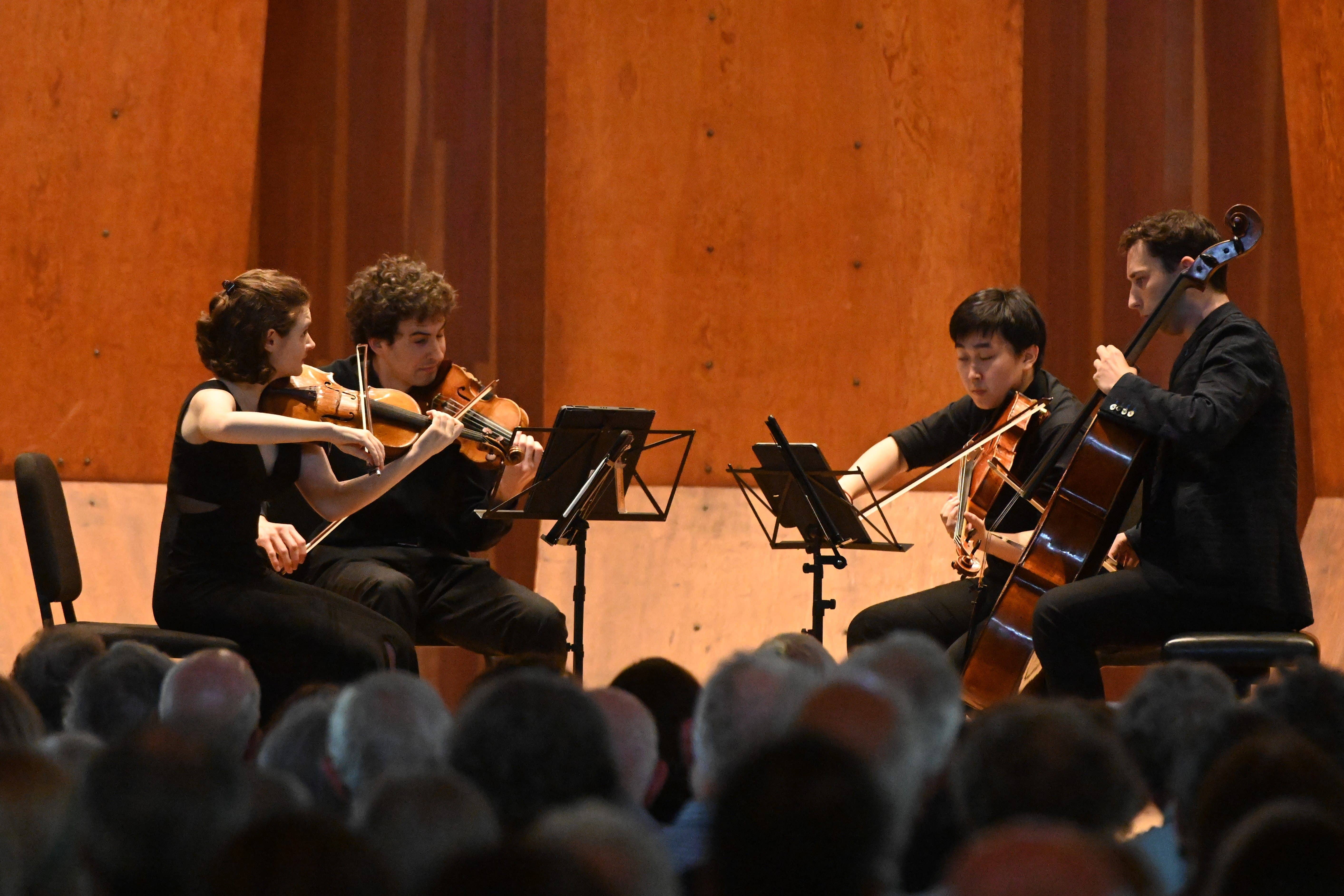
The mood deepens with Shostakovich’s String Quartet No. 8 in C Minor, composed in 1960 and dedicated “to the victims of fascism and war.” Its five movements, played without pause, shift from a spare lament to passages of startling intensity. Shostakovich built the score on a motif derived from his own initials—a quiet act of self-assertion in a period when open expression could still be dangerous. Performed here by violinists Clara Neubauer and Itamar Zorman, violist Ao Peng, and cellist Oliver Herbert, the quartet is intimate and architectural, a work of private reflection that expands to fill the room.
After intermission comes Mendelssohn’s String Quintet in A Major, Op. 18, completed in 1826 and revised a few years later. It stands at the threshold between Classical balance and Romantic warmth. The opening Allegro con moto moves with a graceful inevitability, while the Intermezzo holds one of Mendelssohn’s most lyrical slow movements. The closing Allegro vivace restores momentum with buoyant precision, sending the music forward rather than drawing it to a close. In this performance, Zorman and Neubauer are joined by Peng, Hiroki Kasai, and Herbert.
Marlboro Music itself grew from a belief that this shared approach could renew the art form. Founded by Serkin along with violinist Adolf Busch and the Moyse family, all of whom had left Europe before the war, the school became a haven for artists committed to rebuilding community through music. Over the years, it has shaped countless ensembles, including the Guarneri String Quartet, which formed there in 1964. Many of its alumni now teach at major conservatories or hold principal chairs in orchestras around the world, extending Marlboro’s influence well beyond its Vermont campus.
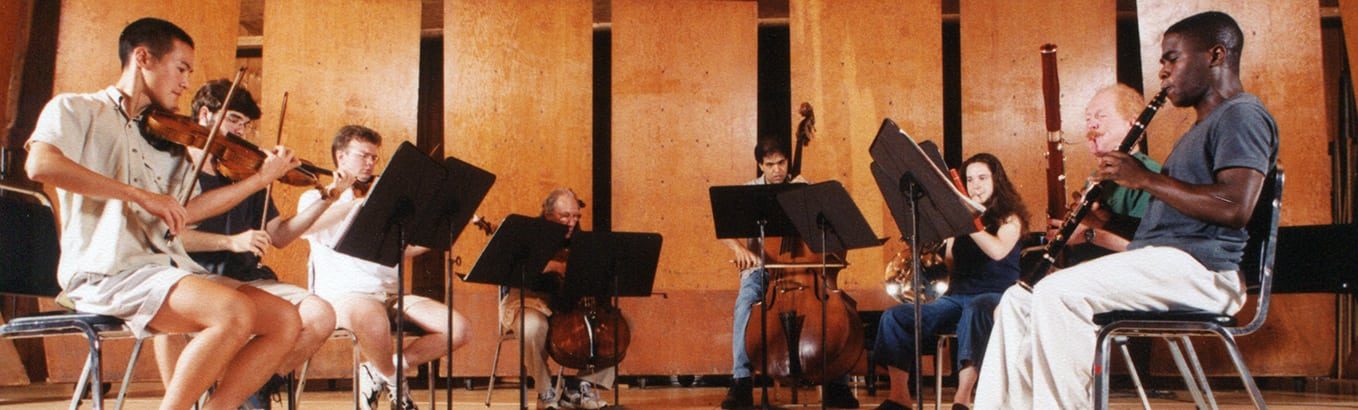
What distinguishes Marlboro, even now, is the time it allows. Each summer, participants spend up to seven weeks rehearsing some 250 works, not for performance quotas but for discovery. Only a fraction of that music is ever performed, and those who attend the summer concerts on Potash Hill speak of them as something more than recitals—moments when the private act of learning becomes briefly visible. The touring ensemble, Musicians from Marlboro, carries that spirit outward, giving audiences a glimpse of the process behind the polish.
The Greenwich concert, presented as part of the Friends Cole Concert Series, offers that same invitation. It is free to attend, supported by the Sylvia and Leonard Marx Foundation and the Friends of Greenwich Library. What Marlboro represents—careful preparation, quiet collaboration, music as a shared pursuit—fits naturally within the library setting, where listening and learning are public acts carried out in private concentration.
The afternoon’s program may trace a broad historical arc, from early-twentieth-century experiment to Romantic exuberance, but the through-line is steadiness. Each composer builds structure from restraint, lyricism from discipline. Heard together, the works suggest that artistic freedom, like democracy itself, depends less on assertion than on balance—on the patience to hear others clearly before joining in.
Sunday, November 23, 2025, 3:00 PM
Berkley Theater, Greenwich Library
Free Admission — Registration Required
greenwichlibrary.org | 203-622-7938
Supported by the Sylvia and Leonard Marx Foundation and the Friends of Greenwich Library.