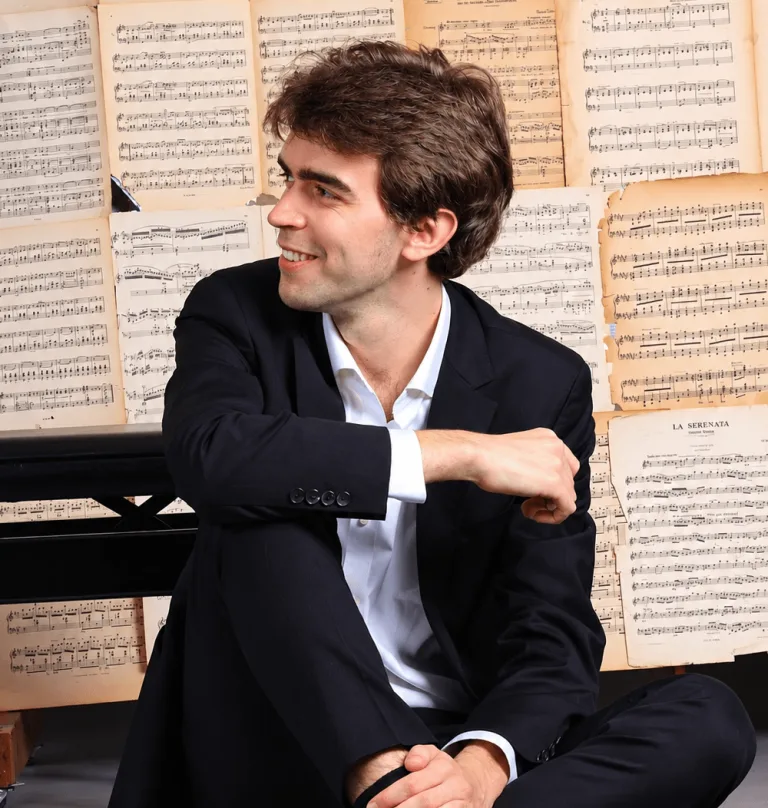
By The Rev. Dr. Justin E. Crisp
Our toddler, Beatrice, is obsessed with the TV show Bluey. For her recent birthday, Bea was given a Bluey stuffie, a Bluey blanket, a Bluey pillow, a Bluey bubble wand, and — you get the picture.
The show is about a family of four cartoon dogs: two kids, Bluey and Bingo, and their mom and dad. Some of the stories are really quite good, and not just for kids. There’s a great episode called “Promises.” Bluey promises to clean up a mess she’s made. But before Bluey can do so, she, Bingo, and Dad leave the house to go to a trampoline gym. On the way, Bluey asks Dad if they can go to the library. Trampolines first, but he agrees they can go afterward. “Do you promise?” asks Bluey. “I promise,” says Dad. Of course they stay too late at the “Trampolinium,” the library’s closed, and when they consequently can’t go to the library, Bluey’s upset that Dad’s broken his promise. They’re relitigating this to Mom later when Mom reminds Bluey she broke her promise to clean up her mess! Everyone agrees to take care only to make promises they can keep, and to work hard to do so. “The whole point of promises is to build trust,” Mom says. “If there’s no trust, none of this is possible,” she says, gesturing around her.
The episode then ends with Dad tucking Bluey and Bingo into bed that night before saying, “I promise I’ll always love you.”
It’s had me thinking about how well I keep my promises — or don’t. I really do try, but my modern life is full, and complicated, like I imagine yours is. I’ve come across an acronym that sums up the modern world I feel like I’m living in. It was used by the US Army War College in the 1980s and 1990s, and I understand it then became something of a shorthand in the corporate consulting world. It’s VUCA: volatile, uncertain, complex, and ambiguous. That’s modernity in a nutshell. In this column, I’ll focus on just one: volatility.
Volatility is rapid, unexpected change. Markets can be volatile. People can be volatile. Heck, schedules can be volatile. (Any day, any time, Bea could get sick at school, and I’m on my way. I bet you know the feeling.) Some volatility’s much more serious than that, even dangerous. Much change, even of the rapid, unexpected sort, is great. But much change is not. Regardless, all the change, in the modern world, is fast. And it is not slowing down. It will not slow down. And it’s hard for anyone to make or keep promises when circumstances keep changing, when circumstances are volatile.
It’s hard for everyone, that is, except God.
The Gospel lesson in many liturgical churches a few weeks ago featured Jesus telling a wild parable (Matthew 18:21-35). Jesus compares the kingdom of heaven to a lord who forgives a large debt owed him by one of his slaves. The forgiven slave then confronts someone who owes him a debt. And rather than follow his master’s example, and forgive his debtor likewise, the forgiven slave mercilessly holds his debtor to every penny. And his lord finds out. Points out his hypocrisy. And “hand[s] him over to be tortured” until he can repay what he originally owed his lord. “So my heavenly Father will also do to every one of you unless you forgive your brother or sister from your heart” (Matthew 18:35).
Yikes! The premise I understand. Jesus’ God is recklessly merciful, forgiving debts and sins left and right. And in the kingdom of such a king, there’s no way to nurse grudges without ruining the whole thing for everybody. When God’s busy resetting the moral clock of the universe, getting lions to lay down with lambs (Isaiah 11:6), we can’t be having it out with our sister about one of us cheating at Monopoly when we were twelve without ruining the whole vibe. The grudge-bearers can’t join. I get it. But yikes: “handed him over to be tortured?” Can’t Jesus’ heavenly Father just put them in the lobby? Ask them to stay at the front desk?
There’s more to say, of course, about Hell — and what Jesus means here — than there’s space for today. For now, just remember this: this parable isn’t the end of the story. It isn’t the end of the Bible. It’s not even the end of the Gospel of Matthew. Some time after this exchange in chapter 18, Jesus is going to die — for us, for all these people, for every character in this parable, even for the one who couldn’t give up his grudge. Jesus will die for all, and be raised for all, so that God “may be merciful to all,” as the Apostle Paul puts it (Romans 11:32).
Because there’s one really big difference between the lord in Jesus’ parable in Matthew 18 and His heavenly Father: the lord, Jesus says, acts in anger, and our heavenly Father isn’t angry.
There’s a remarkable passage in the book of the prophet Isaiah: “‘To me,’ says the Lord, ‘this is like the days of Noah, when I swore that the waters of Noah would never again cover the earth. So now I have sworn not to be angry with you … My unfailing love for you will not be shaken nor my covenant of peace be removed’ (Isaiah 54:9-10).
God isn’t angry anymore. He promised.
And the rest of the story of the Bible is how far God has, and will, and ever will go to keep His promise.
The world is volatile. There’s no pretending it isn’t. I honestly don’t think we need to despair about the future. I see plenty of reason for optimism, not to mention hope. But the road’s going to be wild. It’s going to be volatile. And that’s why I cherish my relationship with God so much.
I feel great urgency about this. I feel that if people don’t have a relationship with God as they understand Him, a relationship like the one I have with Jesus, like we invite people to in our church, the volatility of our world will capsize them.
This isn’t really a theological claim, or a sociological or scientific one. It’s personal. There’s just one reason I can get up in the morning, kiss my wife, hug my baby, and all three of us, and our dog, greet the volatile day, and not be afraid: it’s Jesus. Because His Father promised. Promised not to be angry (Isaiah 54). Promised to be with us always (Matthew 28). Promised to let nothing separate us from Him (Romans 8). The most powerful Being in the universe promised me, and you. He promised He’ll always love you.
The Reverend Dr. Justin E. Crisp is a husband, dad, music lover, and priest. He is Rector of St. Barnabas Episcopal Church and lives with his wife, Jewelle, their pug, Val, and their daughter, Beatrice, on the St. Barnabas hilltop in backcountry. His teaching can be found at stb arnabas.org, YouTube, and wherever you get your podcasts.