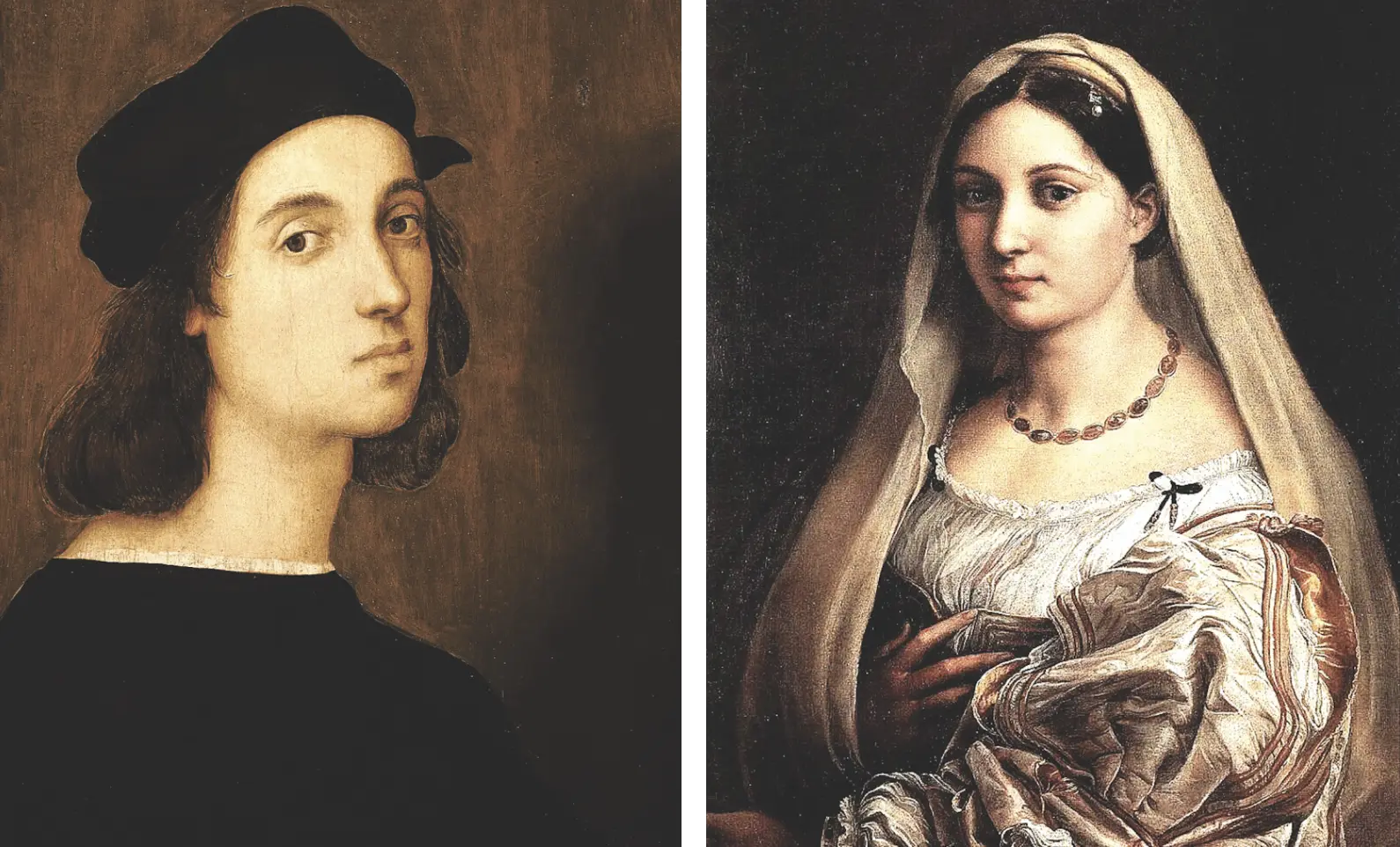
Top Left: “Raphael Self Portrait 1504 Uffizi” Contributed photo. | Top Right: “Donna Velata, 1513, Pitti Palace (image of Fornarina) by Raphael. Contributed photo.
By Anne W. Semmes
For those who missed the first and comprehensive exhibit of “Sublime Poetry –Raphael–A Master of Serenity” at the Metropolitan Museum of Art earlier this year, Page Knox brought it all to light last Wednesday for the members and guests of the Greenwich Branch of the English-Speaking Union at their luncheon at the Round Hill Club.
With her focus on “this fabulous renaissance artist… often compared at the time to Leonardo and Michelangelo” she hoped to “entice” viewers “to head over to Europe… to places like the Louvre… to cities like Prague to see other aspects of Raphael that were not in the exhibition.” Knox has often taken art lovers abroad on tours when not teaching in the Art History Department of Columbia University.
Addressing a concern that 21st century viewers might not resonate with Raphael’s often religious subject matter, she read a quote from his contemporary, Giorgio Vasari: “Heaven now and again unites in one person the inexhaustible riches of its treasures and all those graces and rare gifts which are usually shared among many over a long period is seen in Raphael Sanzio of Urbino, who is as excellent as gracious as endowed with a natural modesty and goodness.”
Knox continued, “Raphael doesn’t tend to be as edgy, as just curious, as struggling as Michelangelo or Leonardo. He’s just known for being beautiful.” The exhibit thus focused on “where did this beauty come from and how did Raphael achieve such greatness in such a short period of time?… He dies at the age of 37.” A career cut short Knox would tell, “Because the Pope worked him to death…always assigning him different projects.”
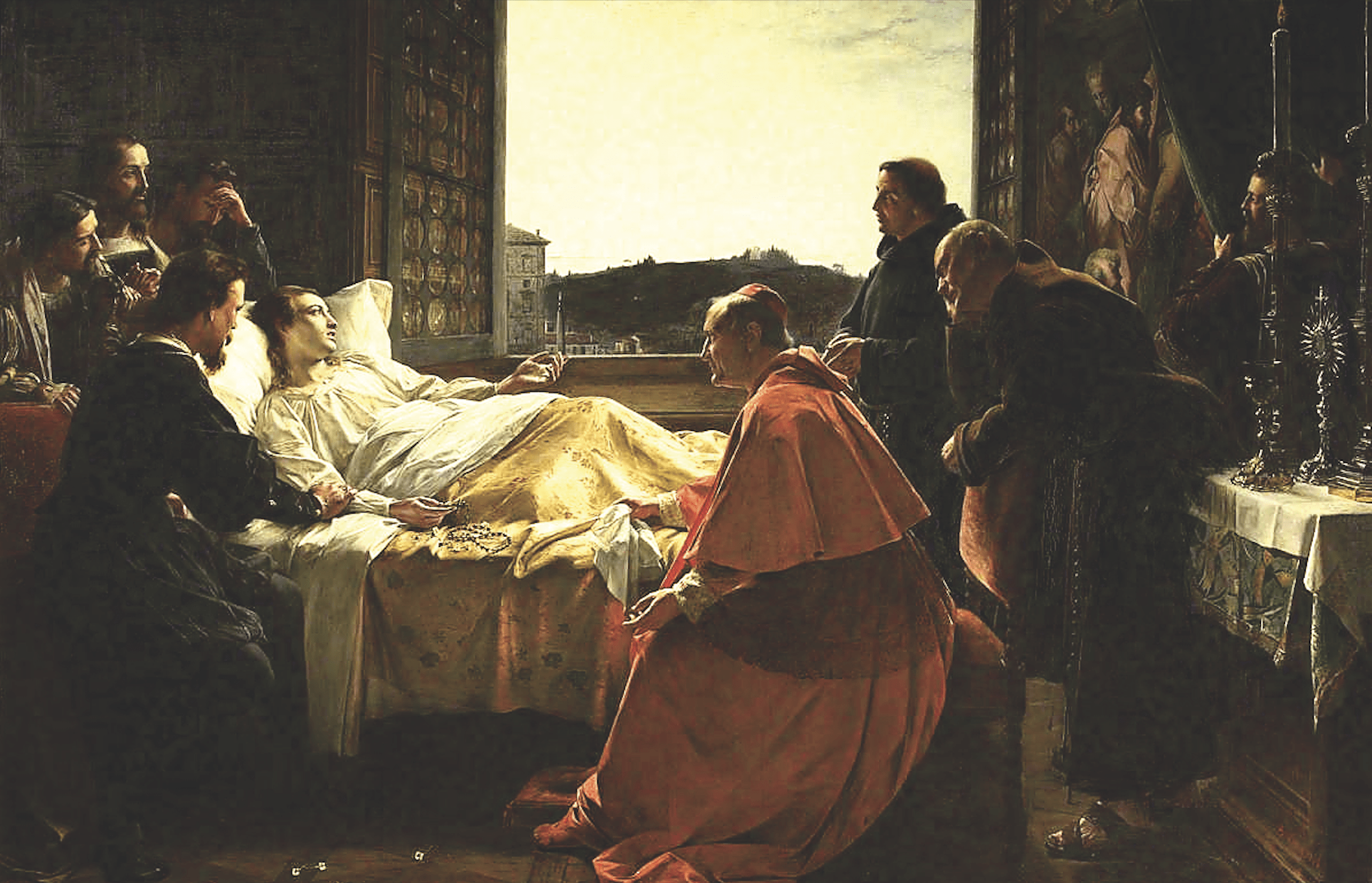
She showed a moving 19th c. painting, of “The Last Moments of Raphael” seen surrounded by his Pope Leo X and others. “He actually died on his birthday, which is quite a legendary achievement… but he also died on Good Friday. And so, Raphael started to take on this Christ-like characteristic mythology, and he became a larger-than-life figure.”
“He’s buried in the Pantheon,” she told, “as the only artist to be given that recognition. His tomb speaks to his interest in poetry… The show wanted to focus on this poetic aspect, this aspect of beauty, and to really think how did Raphael achieve this?”
So, look to his origin story. “He’s born in Urbino, an important town in Italy on the East Coast… the brainchild of this marvelous Duke of Urbino, Federico de Montefeltro…a very important court where scholars, artists, sculptors, literary figures all gathered. This was where Raphael grew up…He has the full embrace and support of his father… taking him to work at a young age in the workshop of Perugino… one of the most important artists living and working in Italy.” Raphael would learn to draw then “transfer the drawing onto the canvas.”
Raphael is a “quick learner.” “He adopts the style of Perugino, recognizing certain tropes, certain compositional elements, and then makes them his own. But Perugino is not terribly happy that Raphael is appropriating his style–you’re starting to see the pupil exceeding the master.”
Raphael would be drawn to Florence, learning of a competition to decorate its Palazzo Vecchio with murals of battles won by Florence. “Two best artists” are chosen, Michelangelo and Leonardo. But Michelangelo is summoned to Rome by the Pope, and Leonardo abandons the mural project, then “encourages Raphael to come to his studio and they talk a lot about the nature of drawing.”
“He basically says Raphael, ‘Perugino looks so 1490’s. You’ve got to get into the 16th century. Drawing has to be dynamic… It has to relate to the way you experience the world.’ So, you see Raphael’s style completely changing… He’s copying a lot of Leonardo works… That’s not to say that he doesn’t also look at Michelangelo and learn from Michelangelo. He’s getting the best of both of these artists at the top of their game, then establishing himself as a painter.”
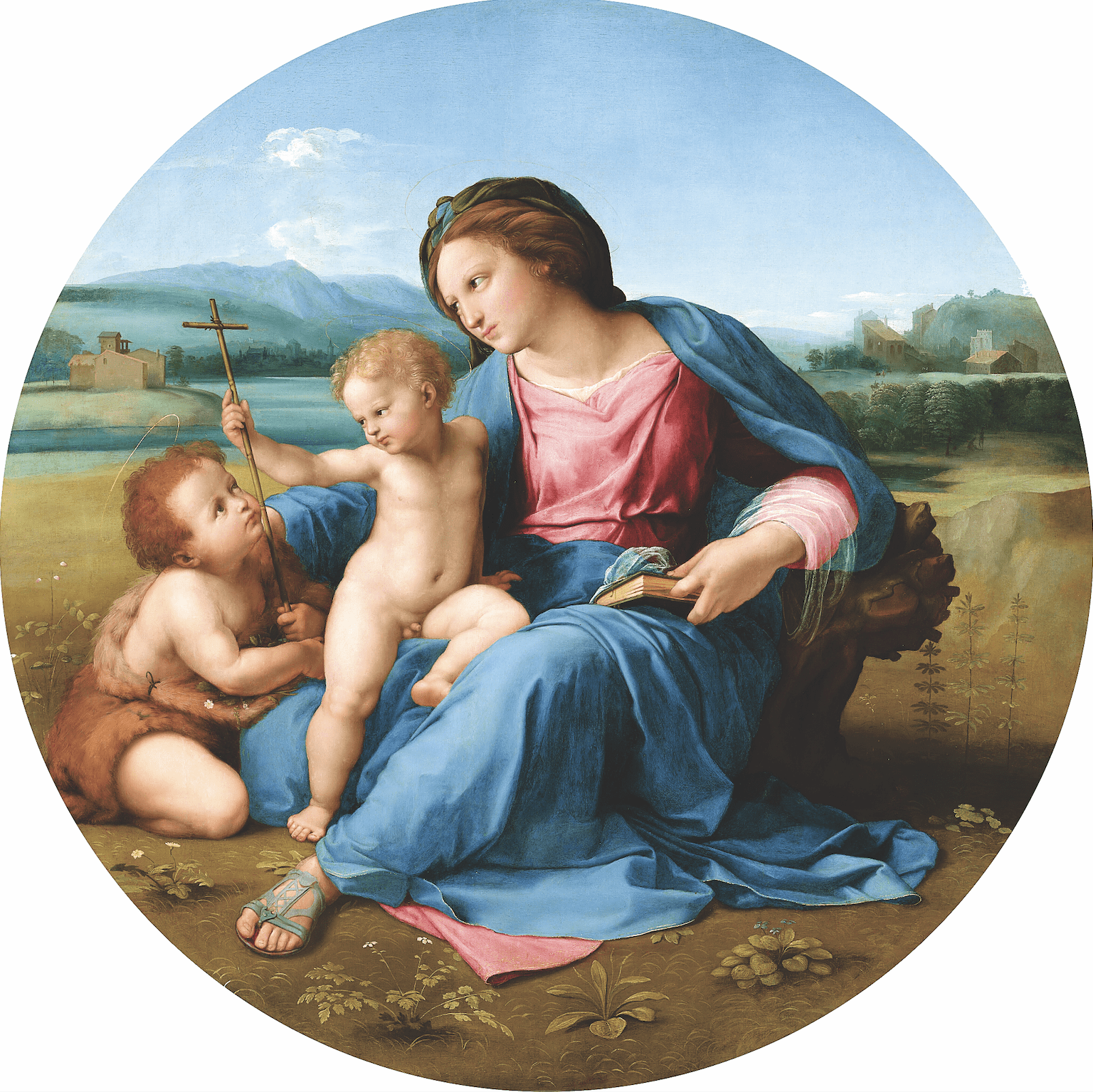
Knox would display Raphael’s winsome “The Virgin and Child with the Infant Saint John the Baptist in a Landscape (The Alba Madonna)” from the National Gallery. “It was one of the great paintings of the show,” she said. Viewers would see in his drawings “how Raphael was looking at Leonardo drawings and using Leonardo’s techniques to create a more dynamic image of the mother and child… These marvelous drawings were placeholders for the paintings-you could see the mind and the hand of the artist.”
Why was the Virgin and Child such a popular topic? Yes, as an important moment in Christian religion, but also was the sad history of that time as noted by the Met show curator Carmen Bambach. “There was such a high level of infant mortality. Everybody in this era had lost a mother, a spouse, a sibling.” Thus, “a successful birth of a mother and child was to be celebrated.” Add too, “Raphael’s mother died when he was nine years old giving birth to his sister… So, this is very personal to Raphael. You see the tenderness between the virgin and child you haven’t seen before.”
Raphael would be summoned to Rome by then Pope Julius to paint his apartments. Pope Julius will die, “and the next Pope Leo the X will continue the project.”
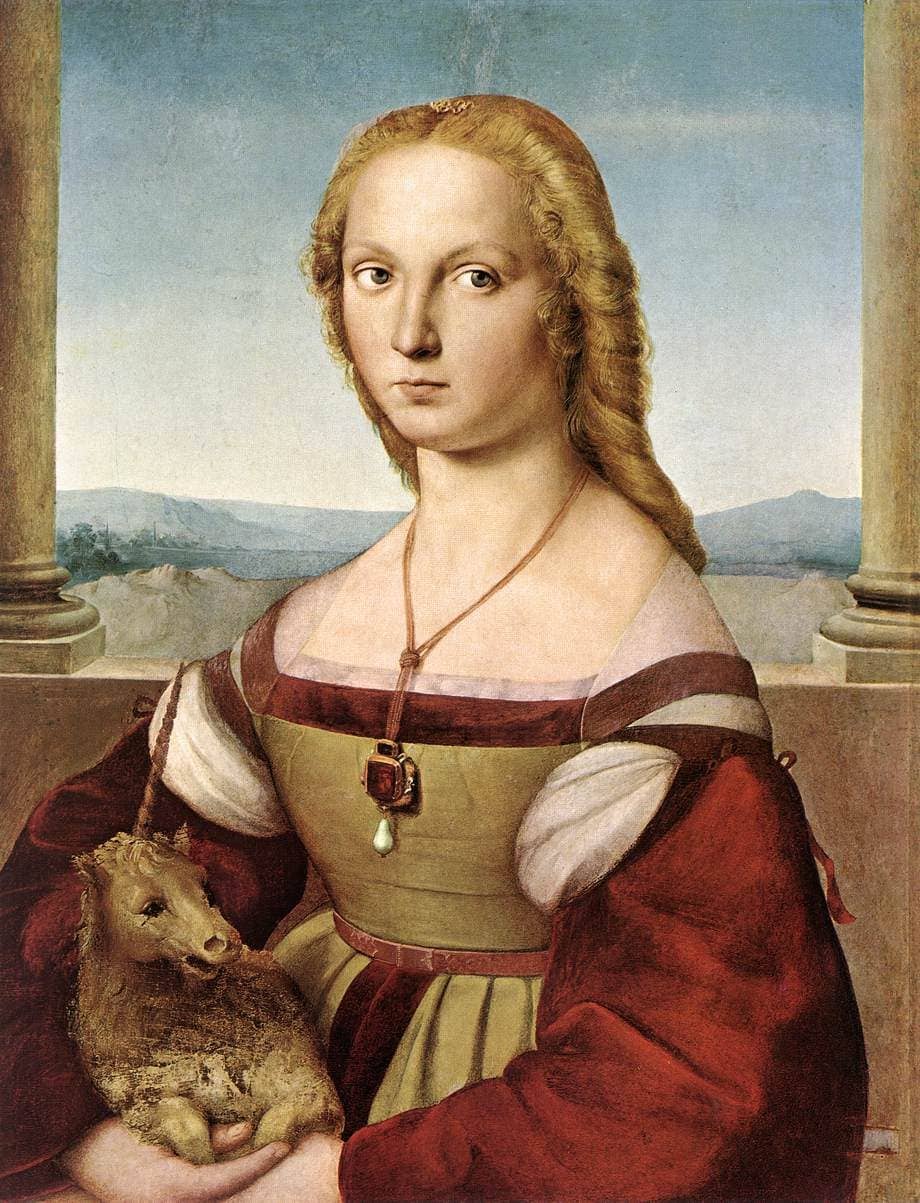
Leonardo will again be a gamechanger for Raphael after he sees Leonardo’s Mona Lisa, told Knox. “The traditional portrait in the Renaissance was the woman is always in profile.” But Leonardo “turns her to face you…you look at her eyes, and you say, ‘What’s she thinking about?… So, you can see Raphael start to paint in the new modern style.” Next on the screen was another favorite of Knox’s, Raphael’s portrait of a “Young Woman with a Unicorn (Laura Orsini della Rovere).” “So, Laura Orsini was the daughter of… the most beautiful woman in Rome who also happened to be the mistress of the Pope. So, to create a married portrait, you’re going to have to make her look a little more virginal. So how do you do that? In goes the unicorn. It’s only the virgin that can contain the unicorn.” And it is in Rome that Raphael will meet “the love of his life… Fornarina (baker’s daughter). She’s also captured in portraiture, but in a very intimate way”- in the nude. But add his “marvelous portrait” of Dona Velata from the Barberini family that is the image of Fornarina but finished after Raphael’s death. And just how does Raphael die? He’s working at the Pitti Palace… They know the Fornarina is a distraction.” So Fornarina is invited into the Palace, and “Raphael has this big night with the Fornarina – and he dies with a smile on his face…”
For Raphael’s contributions to the Sistine Chapel, we have Michelangelo’s influence with his glorious work on the Chapel’s ceiling. With there not being an emphasis “looking down” in the Chapel, Raphael would sign on to Pope Leo’s idea to include tapestries. “These tapestries were woven in Flanders with gold and silver thread,” said Knox, “Very expensive, the most elite art form you can have… They are still on view in the Vatican Museum.” Raphael’s cartoons for those tapestries would become “so highly valued that they are purchased by the King of England. And if you want to see these cartoons, you must go to the V&A in London.”
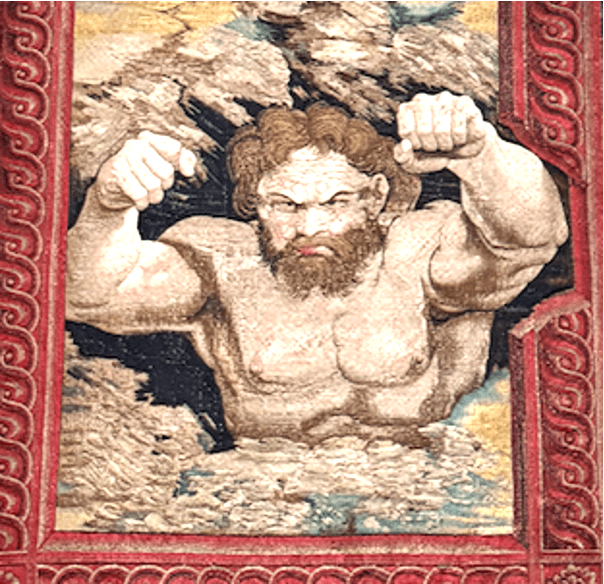 The last impacting image is found in one of those tapestries. Raphael has pictured the apostle Paul incarcerated, in an earthquake sent by God to break him out of the jail. “Why am I showing you this?” said Knox. “Because this does not look like Raphael. This looks like Michelangelo. Think the Last Judgment, of Michelangelo’s engagement with the body. These were done at the end of Raphael’s life… Had Raphael survived to witness the reformation, to witness the sack of Rome, to witness the horrors of these religious wars, how would that have changed the face of painting for the next 500 years?”